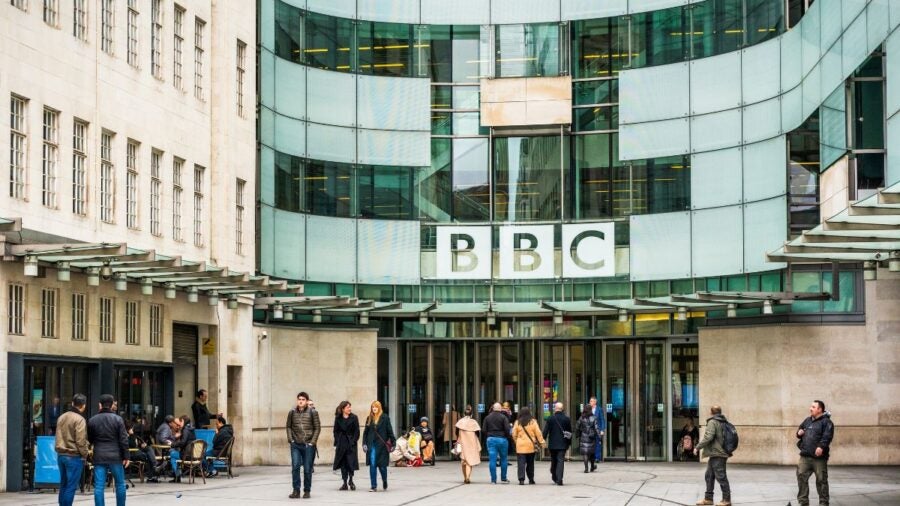
As the government opens a consultation on new funding models ahead of the BBC’s 2027 charter renewal, an apparently technical question has forced something larger into view: should any British institution still stand outside market logic? For most of the past century, the BBC, the NHS and the monarchy have been treated as exceptions – national fixtures, insulated to varying degrees from the transactional rhythms of commercial life.
Each was shaped, formally or informally, by the post-war settlement: a belief that some services should be universal, collectively funded and shielded from pure consumer choice. Each now faces the same, unavoidable question: will future generations accept any version of that bargain?
The NHS is wrestling with whether universal care can survive effectively infinite demand. The monarchy is navigating relevance in a media environment that no longer grants deference by default. And the BBC is confronting the most fundamental question of all: what is it for in 21st‑century Britain? And critically, who should pay for it?
At first glance, the green paper published this week looks cautious. Ministers insist they are “keeping an open mind”. General taxation is ruled out, but everything else – advertising, subscriptions and differential licence fees – has been placed firmly on the table. Yet behind the procedural language sits something far more profound: the possible end of the BBC’s historic exceptionalism.
For a century, the licence fee has done something unique. It insulated the BBC from both market pressure and, at least in principle, direct political control. It allowed the corporation to claim that it served everyone equally, regardless of income, taste or ideology. That claim has always been contested, but it has also been powerful. It is: what allows the BBC to argue that it is not just another media company, but a civic institution?
A commercial shift
Introducing advertising or subscription tiers changes that logic irrevocably. Even a limited advertising model, say, restricted to online services, would mean that the BBC is no longer structurally different from ITV, Channel 4 or the global streaming platforms it competes with. Audience size and engagement would suddenly matter not just culturally, but commercially. Programme decisions would have to be justified twice: editorially and economically. That does not automatically mean a race to the lowest common denominator, but it does mean the centre of gravity shifts.
More precarious still is the issue of trust. The BBC’s authority rests on a fragile, increasingly contested belief that it is independent – of government, of commerce and of factional interest. Advertising introduces not only real conflicts, but perceived ones. Once audiences begin to ask whether an editorial decision was shaped by advertiser pressure, brand safety concerns or revenue anxiety, the damage is done. Trust, once diluted, is rarely restored.
Advertising introduces not only real conflicts, but perceived ones
A subscription “top‑up” model poses a different but equally serious risk. On paper, it sounds reasonable: keep the licence fee but allow audiences to pay extra for premium entertainment. In practice, it almost inevitably creates a two‑tier BBC. Public service content – news, education and minority interests – remains free but financially stretched, while drama, sport and high‑end entertainment migrate behind a paywall.
The BBC’s greatest strength – its ability to create shared national moments – weakens as its audience fragments. And fragmentation is the enemy of legitimacy. Ironically, these changes may increase pressure on the BBC rather than relieve it. Advertising brings advertiser sensitivities. Subscriptions bring churn anxiety. Both reward caution and punish controversy at exactly the moment when the BBC is being asked to stand firm on accuracy, impartiality and misinformation. Add intensified political scrutiny and ongoing culture‑war skirmishes, and the corporation risks becoming more constrained, not more independent.
Opportunities and risks
For brands and advertisers, however, this debate opens a provocative and delicate prospect. If advertising were permitted on BBC platforms, even in a tightly controlled form, the BBC would instantly become the most prestigious media environment in the UK. In a landscape dominated by algorithmic chaos, misinformation and brand‑safety scandals, the BBC offers something increasingly rare: trust at scale. Advertising alongside BBC content would not be about performance metrics or short‑term conversion. It would be about credibility transfer – a signal that a brand is serious, established and aligned with public value.
But this would not be advertising as usual. Ad loads would be light, formats conservative, categories restricted. Prices would be high. Scrutiny would be intense. Brands would not just buy reach; they would inherit responsibility.
Trust, once diluted, is rarely restored
Advertising on the BBC would be seen as an endorsement of the institution itself and when the BBC is criticised, advertisers may find themselves drawn into the debate whether they like it or not. Handled carefully, this could create the most significant advertising environment in Britain. Handled poorly, it could accelerate the erosion of trust for both the BBC and the brands associated with it.
This brings the argument back to the larger question shared by the NHS and the monarchy alike. These institutions were built for a society that believed in universality, shared obligation and collective benefit. Today’s Britain is more individualised, more transactional and more sceptical. The licence fee, like the NHS model and the hereditary monarchy, increasingly feels like an inheritance from another era. Respected? Maybe. But unquestioned? Definitely not.
The BBC’s funding debate is not really about how to raise £3.8bn a year. It is about whether Britain still believes that some institutions should sit outside pure market logic and whether a new generation, raised on choice, subscription and personalisation, will consent to paying for something they didn’t ask for and don’t use all of.
Richard Exon is the founder and chief executive officer of Joint, a brand agency.
As the government opens a consultation on new funding models ahead of the BBC’s 2027 charter renewal, an apparently technical question has forced something larger into view: should any British institution still stand outside market logic? For most of the past century, the BBC, the NHS and the monarchy have been treated as exceptions – national fixtures, insulated to varying degrees from the transactional rhythms of commercial life.
Each was shaped, formally or informally, by the post-war settlement: a belief that some services should be universal, collectively funded and shielded from pure consumer choice. Each now faces the same, unavoidable question: will future generations accept any version of that bargain?
The NHS is wrestling with whether universal care can survive effectively infinite demand. The monarchy is navigating relevance in a media environment that no longer grants deference by default. And the BBC is confronting the most fundamental question of all: what is it for in 21st‑century Britain? And critically, who should pay for it?