The UK talent crisis has become a familiar refrain. Employers are struggling to fill roles and facing widening skills gaps, especially in technical and data-driven jobs. Last year, 70% of business leaders reported recruitment difficulties, according to a survey by the British Chambers of Commerce.
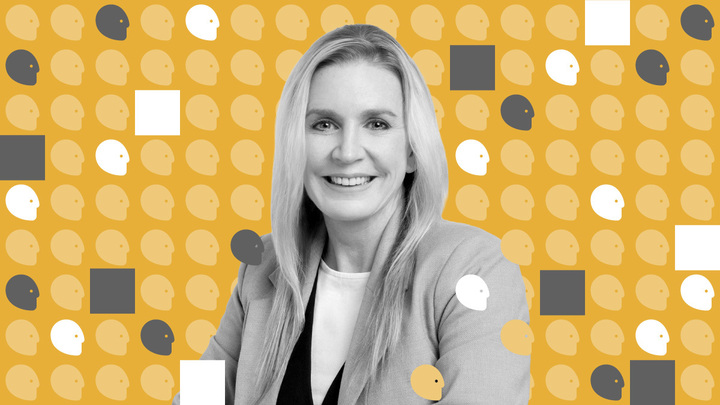
Corporate Britain has responded with no shortage of hand-wringing over a shrinking talent pool. But Michelle Carson, chair and founder of the executive search firm Holmes Noble, calls this narrative “nonsense”.
“The UK does not lack talent,” she insists. “Employers are facing self-inflicted skill shortages caused by rigid hiring processes and outdated apprenticeship designs that systematically exclude anyone who doesn’t fit the traditional mould.”
As a leader with autism and ADHD and 30 years of experience placing executives, Carson has seen first-hand how conventional hiring practices create unnecessary barriers for neurodiverse candidates. “By relying on narrow selection methods, organisations end up competing for a tiny fraction of the workforce, usually those who are simply good at passing tests.”
The qualification trap
Carson points to one clear example of these self-imposed barriers: the shift toward degree-level thresholds for apprenticeships. While the recent rebranding of apprenticeships has raised their profile, entry requirements have gradually drifted toward formal academic credentials, creating unnecessary hurdles for capable candidates.
The latest government statistics show that a growing share of apprenticeship starts are at higher qualification levels (Level 4 and above), including degree-equivalent programmes, while intermediate and lower-level starts have declined.
It’s as simple as asking the questions sometimes
“These goal posts persist because they’re convenient filters,” Carson explains. “They reliably show who’s effective in that setting. But the education system doesn’t recognise ability evenly.”
Carson adds that conventional assessment processes, too, often favour specific learning and communication styles, meaning many talented young people have their strengths misread or overlooked early on.
When academic benchmarks act as gates, early disadvantages are reinforced rather than mitigated. Carson calls this a capital misallocation problem: public funding and internal budgets are being squandered on assessment methods that narrow the candidate pipeline instead of broadening it.
“Assessment centres and traditional interviews often fail to capture the true capabilities of neurodivergent individuals. Practical work trials, where candidates demonstrate their skills in real-world scenarios, are often a far superior measure of potential.”
By shifting focus from credentials to demonstrable ability, organisations can unlock untapped talent, improve diversity and make smarter investments in workforce development.
Practical solutions for employers
For businesses willing to take a close look at their hiring and onboarding processes, Carson argues that the so-called talent crisis may not be a shortage at all, but a wealth of untapped potential waiting to be unlocked.
She acknowledges that many employers “genuinely want to do the right thing”, but are often overwhelmed by the perceived scale of making workplaces truly accessible. In reality, however, the changes required are usually simple and low-cost.
“It’s as simple as asking the questions sometimes,” Carson notes. Small adjustments can make a big difference: ensuring briefing documents are sent in accessible formats, providing interview questions in advance or checking seating preferences to reduce sensory overload. “By asking and listening, organisations can remove small but impactful barriers, enabling employees to perform at their best.”
A culture of conformity
Unfortunately, barriers in hiring and assessment don’t disappear once talent enters the organisation. For many neurodivergent employees, challenges persist as they rise through the ranks, with workplace culture and unspoken expectations creating new obstacles that can affect retention and career progression.
Neurodivergent individuals often prioritise task completion over social performance, which can clash with corporate norms. Early in her career, Carson recalls being criticised for staying late to finish her work rather than joining colleagues for after-work socialising. “I was treated as an outcast and accused of trying to show my peers up, rather than being recognised for my dedication,” she says.
Employers are facing self-inflicted skill shortages
She is far from alone. One in five neurodivergent employees has experienced harassment or discrimination because of their neurodivergence, according to findings by the Chartered Institute of Personnel and Development (CIPD), the professional body for HR. Only 52% feel their organisation fosters an open and supportive climate for discussing neurodiversity, and just 37% believe their employer provides meaningful support.
These workplace conditions can drive disengagement and prompt exits. In fact, a 2024 survey of 500 neurodiverse founders by E. Ives for The Entrepreneurs Network, in partnership with Barclays Eagle Labs, found that nearly two-thirds had struggled to secure employment because of their neurodiversity. A further 64% felt that starting their own business was the only viable path to earning a living.
“Boards and managers need to take ownership of creating an environment where employees feel safe to share their needs,” Carson says.
Businesses have every incentive to fix apprenticeship and recruitment challenges, but overhauling centuries-old systems is no small task. Rising costs also leave firms with less to invest in training, making the problem even more urgent. For Carson, however, it can no longer be ignored.
The UK talent crisis has become a familiar refrain. Employers are struggling to fill roles and facing widening skills gaps, especially in technical and data-driven jobs. Last year, 70% of business leaders reported recruitment difficulties, according to a survey by the British Chambers of Commerce.
Corporate Britain has responded with no shortage of hand-wringing over a shrinking talent pool. But Michelle Carson, chair and founder of the executive search firm Holmes Noble, calls this narrative “nonsense".
“The UK does not lack talent,” she insists. “Employers are facing self-inflicted skill shortages caused by rigid hiring processes and outdated apprenticeship designs that systematically exclude anyone who doesn’t fit the traditional mould.”