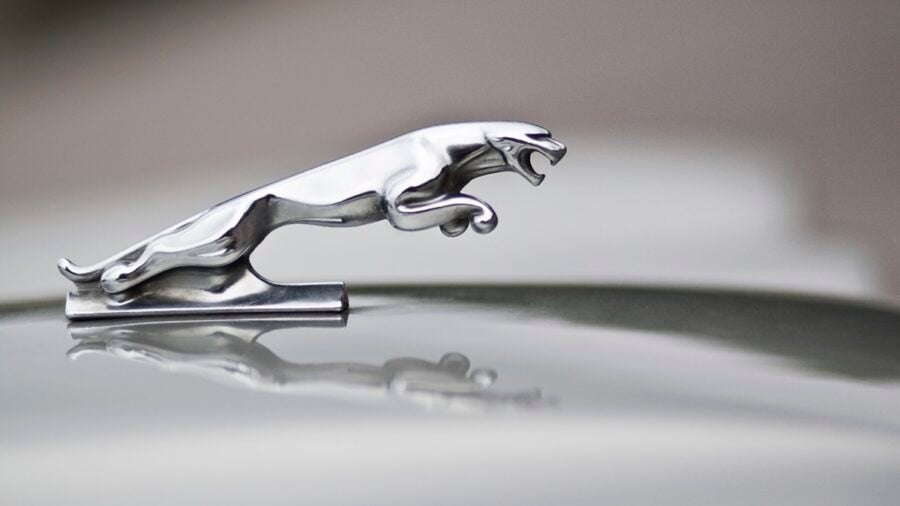
History remembers Apple’s “think different” campaign as the moment a tech giant found its soul. It was a bold reset that helped define its rise to become the world’s most valuable company. Jaguar’s recent attempt to shed its British stuffiness through high-fashion futurism came from a similar instinct. The carmaker hoped its “copy nothing” campaign would deliver an equally era-defining reinvention. But where Apple’s bravery deepened its connection with customers, Jaguar’s risk-taking appeared to alienate loyal buyers without winning over new ones.
The intention was noble, but the gamble failed to pay off, leaving Jaguar with a new logo that few recognise. The business world is littered with failed marketing campaigns, from Apple’s widely criticised and tone-deaf “crushing” commercial to McDonald’s rapidly retired AI Christmas ad. But when well-run companies with highly regarded leadership teams repeatedly miss the mark, the pattern points beyond individual error to systemic weaknesses in how the industry works.
A failure of tools
I view this through a different lens to most marketers. I am a physicist. I spent a decade in quantum mechanics before I started working on a much harder problem: trying to understand and predict human behaviour. So, when I look at the Jaguar moment, I don’t see a failure of art or creativity. I see a failure of tools.
A dangerous chasm has opened up between the boardroom and the general public, and our current toolkit – built for a slower, simpler era – is no longer capable of bridging it.
Focus groups only allow you to test with the tiniest slice of society. Surveys take weeks and cost tens of thousands, with no ability to follow up and dive deeper. Scraping social media sentiment often captures the outrage of the few rather than the perspective of the actual customer. This means that when CEOs and their creative teams make consequential decisions, they are working with information that simply isn’t up to the task of reading and reflecting back the modern cultural landscape.
Jaguar’s team had the best intentions, but they were working with a toolkit that couldn’t handle the complexity of the shift they were attempting. They couldn’t afford to fail in private, so they failed in public. Traditional approaches are no longer able to deliver a genuine understanding of how an audience thinks, feels, and will react. True bravery in branding requires staying grounded in how real people perceive your value. The best ideas are those that resonate across all audiences; retaining loyalists while captivating the new. Finding these answers is notoriously hard and demands a level of testing and probing that traditional methods simply cannot sustain at scale.
The solution
Fortunately, the technology to close this gap has arrived. To avoid “doing a Jaguar,” leaders must utilise every tool and data point available. We no longer have to rely on a single Gen Z colleague in the room to speak for their entire generation, because AI-powered sentiment platforms can now monitor public reaction in real-time across millions of data points. And we don’t have to turn to staid focus groups to unlock human insight, because another vital breakthrough has come in the form of synthetic audiences.
By taking real data from an actual customer base and building an AI model that replicates their perspectives, brands can now query their audience repeatedly. This allows for a depth of ideation that was previously impossible. You can run A/B tests on messaging, explore creative directions that might be too risky for public testing, and probe exactly why a specific visual might alienate your core demographic – all in a matter of hours. The point isn’t to replace human judgment, but to provide that judgment with the highest quality raw material possible. Organisations, such as Mars and The Times, are already using these tools to explore ideas that would be too expensive or risky to test conventionally.
Marketing has always been about creative risk, and fresh, challenging ideas remain the hardest thing to manufacture. Creative ambition isn’t the problem; it’s taking those risks without knowing if your audience is with you. CEOs who embrace these new tools will find themselves making decisions with genuine confidence rather than educated guesses dressed up in research language. Ensuring an idea lands with the people you are trying to reach has become a solvable problem. The brands that figure this out first will have an advantage that compounds over time, while the rest will continue to wonder why their “brave” new vision left their customers behind.
There is a fear that data kills creativity and that AI will force everyone and every idea into a bland middle. The opposite is true. Uncertainty kills creativity. The fear of “doing a Jaguar” kills creativity. This new wave of tools will not stifle the bold; it will enable brands to truly think different once again.
Ben Warner is the co-founder of Electric Twin, an AI-powered digital twin tool used for research. He is the former chief adviser on digital and data to the prime minister.
History remembers Apple’s "think different" campaign as the moment a tech giant found its soul. It was a bold reset that helped define its rise to become the world’s most valuable company. Jaguar’s recent attempt to shed its British stuffiness through high-fashion futurism came from a similar instinct. The carmaker hoped its “copy nothing” campaign would deliver an equally era-defining reinvention. But where Apple’s bravery deepened its connection with customers, Jaguar’s risk-taking appeared to alienate loyal buyers without winning over new ones.
The intention was noble, but the gamble failed to pay off, leaving Jaguar with a new logo that few recognise. The business world is littered with failed marketing campaigns, from Apple’s widely criticised and tone-deaf “crushing” commercial to McDonald’s rapidly retired AI Christmas ad. But when well-run companies with highly regarded leadership teams repeatedly miss the mark, the pattern points beyond individual error to systemic weaknesses in how the industry works.