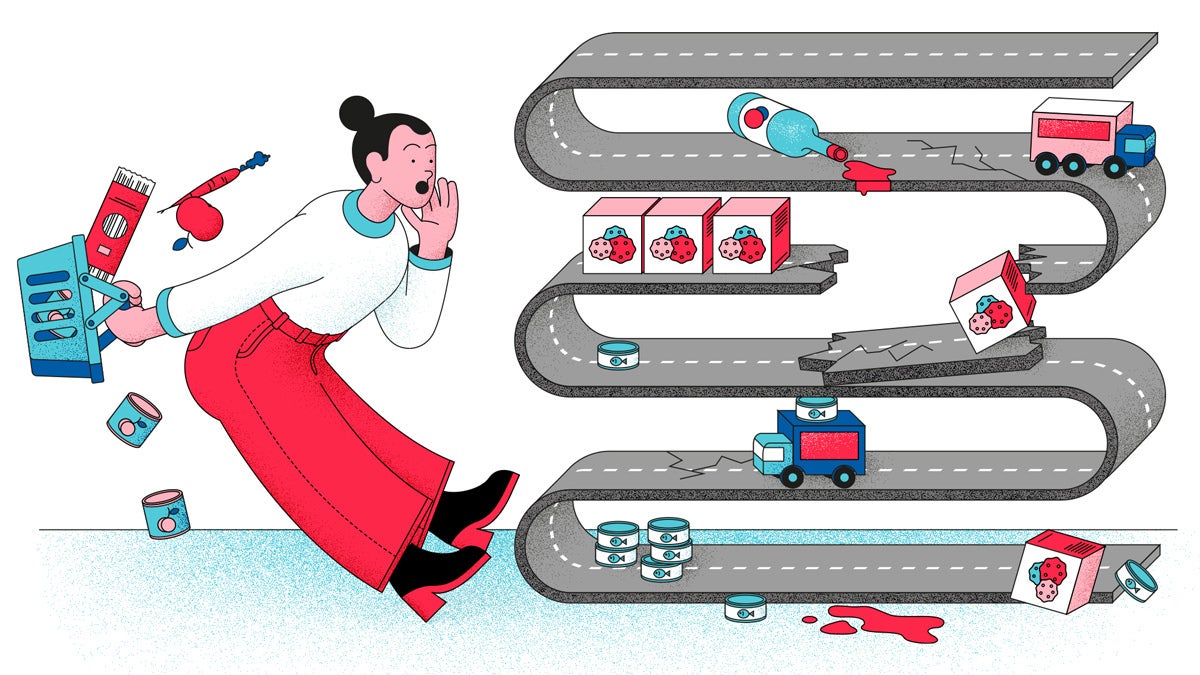
SAP’s latest supply chain outlook predicts that the next phase of transformation will move beyond AI assistants towards orchestration, where intelligent systems coordinate decisions across procurement, manufacturing, logistics and planning. Meanwhile, platforms such as Kinaxis are developing long-running AI agents designed to evaluate changing supply chain conditions, support scenario analysis and help planners make faster decisions.
This shift points to a critical evolution. After years of investing in digital tools to monitor operations, businesses are reaching the limits of visibility alone. Knowing where a delayed container sits does not solve the underlying issue unless an organisation can act quickly. Competitive advantage increasingly depends on how fast a business can coordinate a response — a concept that can be defined as decision velocity.
Beyond visibility
A typical disruption might begin with a port bottleneck that triggers exception alerts, followed by days of siloed emails, emergency meetings and manual spreadsheet modelling. By the time a response is agreed, the disruption may already have spread across inventory, production schedules and customer commitments.
Under an orchestrated model, AI agents could detect early signs of congestion and evaluate alternative responses against inventory levels, supplier availability and production requirements. Instead of simply identifying a problem, these systems can help planners assess options and move towards action faster.
The core breakthrough is not identifying disruption sooner, but significantly reducing the lag between insight and action.
Dominik Metzger, President and Chief Product Officer for Supply Chain Management at SAP, describes orchestration as “that central intelligence that makes the multiple silos and departments work in much better harmony together for better decisions, faster time to response and ultimately better business outcomes.”
Writing for Kinaxis, Gelu Ticala argues that many organisations still struggle to “bridge the gap between insight and action”, particularly when decisions must be coordinated across suppliers, production, inventory, logistics and customer commitments in near real time.
Industry forecasts suggest this transition is accelerating. Gartner predicts that by 2030, 50% of cross-functional supply chain management solutions will use intelligent agents to autonomously execute decisions across supply chain ecosystems.
Scaling the adaptive enterprise
Yet technology alone is unlikely to determine which organisations succeed. Many enterprise AI initiatives still struggle to move beyond experimentation. Fragmented data, disconnected systems and rigid operating models remain significant obstacles to scaling AI across complex organisations.
Fragmented data, disconnected systems and rigid operating models remain significant obstacles to scaling AI across complex organisations.
Achieving genuine decision velocity requires more than deploying new tools. Organisations must strengthen their data foundations and redesign workflows so AI-driven insights feed directly into execution rather than remaining separate recommendations.
The role of human expertise will also change. Metzger describes an emerging “human plus machine” model, where AI handles repetitive analysis while people focus on scenario choice, exception management and stakeholder communication.
The implications extend well beyond supply chain management. As disruption becomes a permanent fixture of global business, the companies that succeed will be those that can bring together information, expertise and decision-making more effectively.
The real advantage will come from organisations that can turn technology into action. As disruption becomes a permanent feature of business, the companies that can anticipate problems, coordinate a response and keep their supply chains moving will be better placed to adapt.
SAP's latest supply chain outlook predicts that the next phase of transformation will move beyond AI assistants towards orchestration, where intelligent systems coordinate decisions across procurement, manufacturing, logistics and planning. Meanwhile, platforms such as Kinaxis are developing long-running AI agents designed to evaluate changing supply chain conditions, support scenario analysis and help planners make faster decisions.
This shift points to a critical evolution. After years of investing in digital tools to monitor operations, businesses are reaching the limits of visibility alone. Knowing where a delayed container sits does not solve the underlying issue unless an organisation can act quickly. Competitive advantage increasingly depends on how fast a business can coordinate a response — a concept that can be defined as decision velocity.