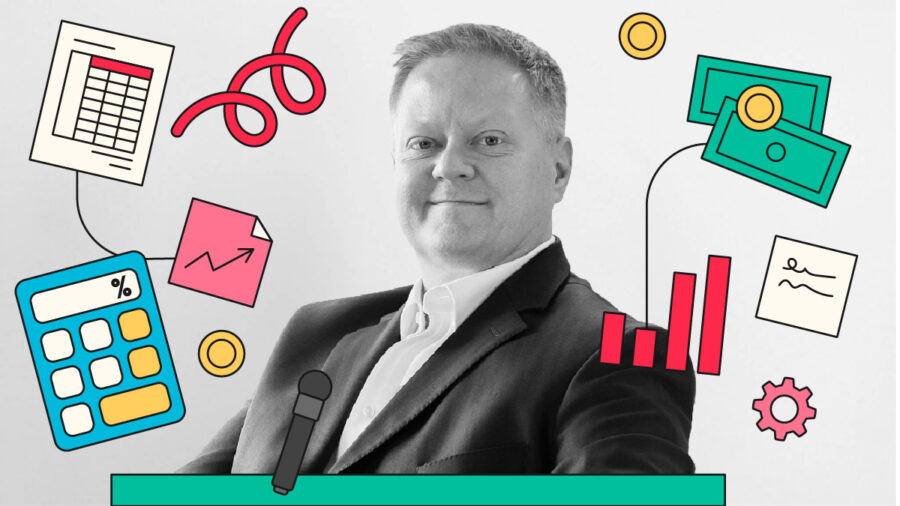
Since 2017, Stefan Wolvaardt has played a key role in shaping Simply Asset Finance (known to its customers as ‘Simply’) from the ground up. The company was created to make business funding easier for small and medium-sized enterprises across the UK, providing asset finance that helps them purchase equipment, release working capital and invest in growth.
He has helped the company grow from a startup into a trusted partner for more than 12,000 businesses across the UK. He brings over fifteen years of financial experience and a practical, people-first style of leadership that keeps the focus on supporting customers and helping them thrive.
Here, Stefan discusses his path to becoming a CFO, what defines good financial leadership and how he maintains balance beyond the balance sheet.
How did you become a CFO?
I was always interested in commerce and finance. At university, I studied econometrics, which is statistics and applied economics. After graduating, I joined the graduate trainee program at Carphone Warehouse. It was a great experience because I rotated through different roles every six to nine months and learned how broad finance really is.
After that, I moved into financial services and spent about thirteen years with one organisation, changing roles every twelve to eighteen months. I worked in treasury, tax and financial control and eventually became finance director of a bank in 2015.
Then, in 2017, I was invited to join a management team I had worked with before to start a new company, Simply Asset Finance, where I took on the role of CFO.
What skills or traits does a good finance leader need?
Open communication is essential. One of my rules is that if there is a problem and I know about it, then there’s not a problem. The worst thing is to be surprised in a meeting by something you were not told about.
People-management is also a big part of the job. It is rewarding to build a strong team and understand how to get the best out of each person. Everyone works differently, and if you respect that you get better results. Finally, it is important to stay calm when things go wrong and know who to bring together to solve a problem.
What excites you most about your current role?
It’s a challenging and rewarding environment. What excites me is having the responsibility along with the authority and support from our investors and CEO to make the decisions needed to help the company succeed. That combination is not always easy to find.
What is the biggest challenge facing your sector at the moment?
Small businesses in the UK have faced many challenges over the last decade, including Brexit, political uncertainty, the cost-of-living crisis, the war in Ukraine and rising interest rates. Many of the larger banks reduced their sales teams after the global financial crisis, which made it harder for smaller businesses to access finance. That is where companies like Simply have stepped in to fill the gap. The biggest ongoing challenge is uncertainty.
What single thing would make your job easier?
Having a good team makes everything easier. My three direct reports have worked with me on and off for more than fifteen years. We know how each other works and that familiarity helps a lot. If you asked what my biggest fear is, it would be losing one of them. I also feel strongly about recruitment. If there is a vacancy, recruitment is the first priority.
What is the best bit of business advice you have ever received?
A former finance director once told me that the best accountant is a paranoid accountant. At first, I thought it sounded negative but, over time, I understood what he meant. It is about being proactive and thinking about what could go wrong so you can address it early. In finance, that balance between driving growth and considering risk is important.
Which book do you think every finance leader should read at least once?
Stephen Covey’s The 7 Habits of Highly Effective People. The first habit, being proactive, is particularly relevant in finance. It is about dealing with issues head-on and choosing how you respond to events instead of reacting emotionally. I would also recommend the film Margin Call. It is a useful reminder of how quickly things can go wrong if you lose focus on the fundamentals.
What do you do outside of work to protect yourself from burnout?
My faith and family are very important to me. I have a seven-year-old son and I spend a lot of time with him. I also enjoy weight-training, reading about sixty to seventy books a year and collecting wine.
Once a month I get together with a group of friends, most of whom also work in senior finance roles, to play Dungeons and Dragons. It might sound nerdy, but it’s a great way to unwind and spend time with people who understand the pressures of the job.
What has been your proudest achievement in your current role?
Building a profitable startup. For the past three years Simply has featured in the Financial Times list of Europe’s 1,000 fastest-growing companies. That is a big achievement for a business that started from scratch.
If you were not a CFO, what would you like to do?
At university I was interested in trading and wanted to work in capital markets, but the timing was not right. If I were not a CFO, I could see myself working in banking, debt and capital markets, consulting or audit. Definitely something that still involves numbers and analysis.
Since 2017, Stefan Wolvaardt has played a key role in shaping Simply Asset Finance (known to its customers as ‘Simply’) from the ground up. The company was created to make business funding easier for small and medium-sized enterprises across the UK, providing asset finance that helps them purchase equipment, release working capital and invest in growth.
He has helped the company grow from a startup into a trusted partner for more than 12,000 businesses across the UK. He brings over fifteen years of financial experience and a practical, people-first style of leadership that keeps the focus on supporting customers and helping them thrive.
Here, Stefan discusses his path to becoming a CFO, what defines good financial leadership and how he maintains balance beyond the balance sheet.