Most modern businesses understand that employees’ family wellbeing affects productivity and engagement, yet employee benefits rarely extend beyond the baby and toddler years.
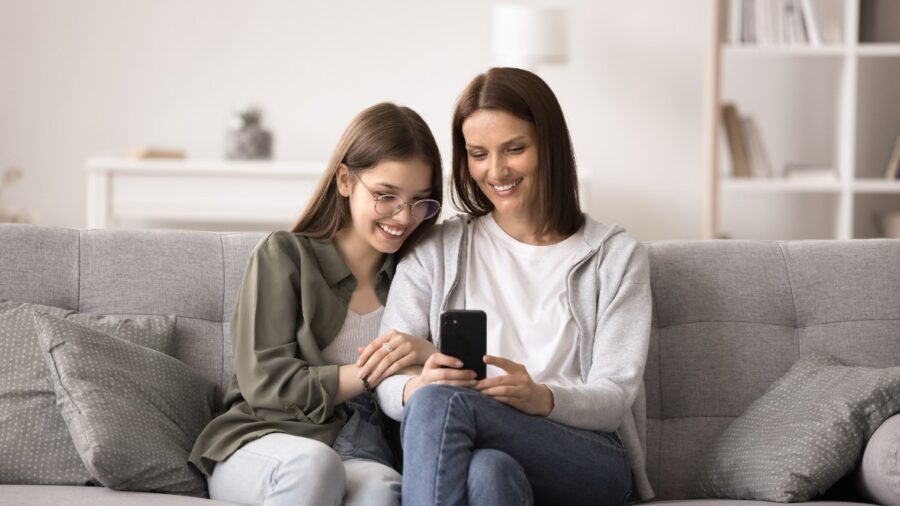
Instead, support often drops off just when teens need more emotional guidance at home. This is particularly true for parents of teenage girls, who face a complex mix of puberty, self-image concerns, social media pressures and misinformation. The female-founded Luna app aims to fill this gap by helping 11-18 year-old girls and their parents navigate the challenges of adolescence. Working closely with medical and adolescent experts, Luna provides trusted advice and education on topics such as mental health, periods and other common concerns, offering families reliable guidance when they need it most.
Why supporting parents of teen girls matters at work
Research shows that 63% of parents believe their children’s health is harmed by online activity, with girls far more likely than boys to encounter body-image issues (25% vs 11%) and unhealthy diet or exercise content (19% vs 9%). As a result, parents often feel a heightened need to monitor and support their teenage children, a responsibility that can quickly become overwhelming and often spills over into the workplace.
“I find it hard to concentrate at work when my daughter is struggling with something. I am very lucky that I work with some amazing women who have older girls who I can talk to but I do find it quite a challenge,” says parent Sarah Byrne, whose daughter uses the Luna app.
Byrne’s experience is far from unique. According to Dr. Katie Malbon, chief medical advisor at Luna, many parents of teens are understandably exhausted and distracted when their children are going through difficult patches. “Even when they’re doing their best to stay focused at work, the worry sits in the back of their mind and impacts their ability to stretch their mental load to other tasks at hand,” she explains.
Online life is exhausting parents and teens
Byrne says she thinks that teens constantly being online is a problem. “It is tiring to have constant pings and notifications, to feel like you are always having to be available, to be ‘online’ until your friends go to bed. Having strict boundaries around this also makes parenting a challenge,” she says.
Workplaces can make a real difference by giving families access to reliable, early education tools
Many teenage girls turn to the internet for answers about their bodies and health, but not all sources are reliable or appropriate. “In clinic, I see so many girls who have felt too embarrassed to ask about their bodies, so they end up searching online and finding advice that’s inaccurate or simply not meant for them,” Malbon explains.
Even when parents are short on time, they need confidence that the apps, websites, and social media their children use are safe and age-appropriate. But with so much unreliable information and changing social media trends, they often struggle to know what guidance their teens are actually receiving online.
“When reliable information is hard to access, young people can mistake myths or trends for genuine guidance. Helping them learn what’s normal, in a safe, trustworthy space, is key to supporting both their health and their digital wellbeing,” says Malbon.
Balancing teen independence with parental awareness
What sets the Luna app apart is that it’s designed specifically for young people, providing clear, age-appropriate information that has been reviewed by doctors. Unlike peer-to-peer chats or forums, teens aren’t exposed to unkind comments or unreliable advice. Instead, they receive calm, empathetic guidance. “It feels a bit like a big sister: supportive, reassuring and thoughtful, especially at a time when they’re feeling vulnerable,” says Malbon.
Luna provides parents with an overview of its expert-curated insights and guides through its “parent layer,” so they can provide support on topics such as mental health, body image and relationships. “I meet many parents who want their teens to have independence but still feel reassured, and the Luna app strikes that balance well,” says Malbon.
Byrne explains that having insight into the questions kids her daughter’s age are asking creates an open dialogue around these topics. “She knows that if she doesn’t want to ask me, she can go to the Luna app and either search or submit. Knowing that every question is vetted and answered by a professional eases my mind immensely,” she says.
Why family support boosts workplace wellbeing
Workplaces can make a real difference by giving families access to reliable, early education tools like Luna app. “When young people get the right information before problems escalate, they’re far less likely to end up struggling in silence or needing repeated clinic visits,” Malbon says. “That support has a positive knock-on effect for parents too, who are less distracted and worried, and can feel more settled at work.”
Byrne also highlights the importance of timely access to health and wellbeing services for children. She says that while it’s great that her workplace offers mental health support for those over the age of 16, this is “too late for the girl who may be struggling with hormonal changes and Autism Spectrum Disorder (ASD) presentations.”
Providing earlier access to mental health services and educational tools could help to address challenges early and nip them in the bud before they intensify. This would benefit both the young person and their family and, by extension, the workplace.
“When employers recognise the pressures of raising teens and offer meaningful help, they benefit from staff who are calmer, more focused, and not constantly firefighting issues that could have been eased with the right guidance sooner,” says Malbon.
By investing in parental benefits that extend through adolescence, employers can ease the mental load on working parents, improve retention and foster a workplace culture that truly values family wellbeing.
To find out how Luna can enhance your employee benefits offering and support parents of teens, visit weareluna.app
This company is part of the Santander X 100 global community due to its innovative proposal. This international community comprises the most prominent Santander X companies, a global entrepreneurship initiative by Banco Santander that supports SMEs, startups, scaleups and entrepreneurial projects with training programmes, online courses, benefits and discounts, exclusive events, challenges and prizes, a community of experts and personalised financial offers.
Most modern businesses understand that employees’ family wellbeing affects productivity and engagement, yet employee benefits rarely extend beyond the baby and toddler years.
Instead, support often drops off just when teens need more emotional guidance at home. This is particularly true for parents of teenage girls, who face a complex mix of puberty, self-image concerns, social media pressures and misinformation. The female-founded Luna app aims to fill this gap by helping 11-18 year-old girls and their parents navigate the challenges of adolescence. Working closely with medical and adolescent experts, Luna provides trusted advice and education on topics such as mental health, periods and other common concerns, offering families reliable guidance when they need it most.