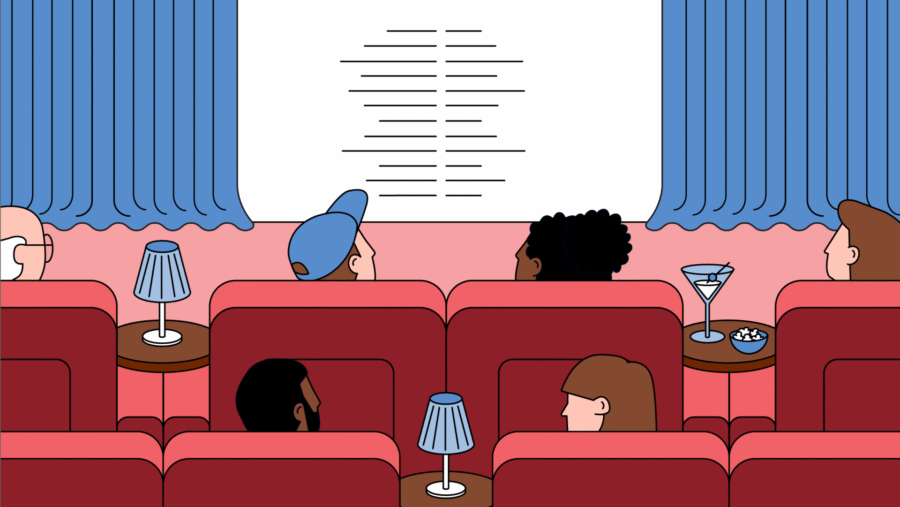
Step into one of Europe’s newest cinemas and you’ll find a venue that looks more like a premium hospitality destination rather than a traditional multiplex.
Reclining leather seats, cocktail bars, table service and premium large-format screens are about far more than comfort. They reflect a broader shift in what customers are paying for.
PwC describes this as the growing value of “shared reality”: the idea that as digital content becomes more ubiquitous, shared experiences become more valuable. The firm believes that shift will support continued growth in the cinema business, forecasting global box office revenues to rise from US$33 billion in 2024 to US$41.5 billion by 2029.
For Europe’s cinema operators, that insight is reshaping their business. Rather than relying on blockbuster releases alone to drive cinema attendance, operators are investing in premium hospitality, immersive technology and alternative programming that encourages audiences to gather.
Yet, as David Hancock, chief analyst at Omdia, points out, this is less a reinvention than a return to cinema’s core strengths. “Cinema has always been built around the fact that it’s the only out-of-home film-viewing medium. It’s always been built around the communal experience,” he says.
The industry’s latest wave of investment is not about changing cinema, but reinforcing what has always made it distinctive.
The premium experience
If shared experiences are becoming more valuable, cinema operators are increasingly focused on raising the value of every visit rather than simply increasing admissions. Premium seating, enhanced food and beverage offerings and immersive formats such as IMAX and Dolby Cinema are designed to improve the cinema experience while encouraging visitors to stay longer and spend more.
“We should have premium seating because it’s more comfortable for people. Food and beverage can’t just be Coke and popcorn. It’s got to be a bar along with hot food as well. Essentially, you’re tailoring your offer to fit the audience you want to target,” Hancock says.
The shift is also changing how success is measured. Belgian cinema operator Kinepolis tracks sales per visitor as a key measure of performance, reflecting a broader move towards maximising the value of every customer interaction rather than simply getting higher admissions.
The change reflects a wider shift in how cinema operators define success: not simply by how many people visit, but by the value they create every time they do.
Entertainment beyond film
Alternative programming is expanding the commercial role of cinemas beyond Hollywood’s release calendar. Live sport, concerts, opera, theatre and gaming events are giving operators new ways to bring audiences together around shared occasions.
The recently concluded FIFA World Cup provided a clear example. Chains including Vue screened matches through initiatives such as Big Screen Sports, positioning cinemas as communal viewing destinations. At a time when major sporting events are readily available at home, operators are betting that audiences will still pay to experience them together.
As Hancock puts it, “Cinema has always competed with leisure options. It doesn’t compete with streaming. If you’re going to stay on the sofa for the night, you’re not going to the cinema. If you think, ‘Where should we go tonight?’ then cinema comes into the picture.”
Rather than competing with streaming on convenience, cinema operators are creating more reasons for audiences to experience entertainment together.
The next generation of moviegoers
If alternative programming is giving audiences new reasons to visit the cinema, the strongest evidence the strategy is working can be found in the audiences filling its auditoriums.
Contrary to predictions that younger generations would abandon the big screen, operators are finding that Gen Z values the communal experience of cinema precisely because it has grown up in a digital world.
For Hancock, the relationship between online platforms and cinemas is not one of competition but of reinforcement. YouTube, TikTok and other digital platforms have become powerful engines of discovery, introducing younger audiences to filmmakers and stories before they choose to experience them together on the big screen.
Kane Parsons’ Backrooms, adapted from his viral YouTube horror series, and Curry Barker’s Obsession, released after the filmmaker built a substantial following on YouTube, illustrate how online audiences can ultimately translate into cinema audiences rather than replace them.
Hancock argues that younger audiences seem to value cinema because it offers something digital platforms cannot: a shared physical experience that has become more meaningful in a chronically online world.
That desire for connection is reshaping what younger audiences expect from a night at the movies. Premium seating, immersive formats and enhanced hospitality are not luxury upgrades; they contribute to an experience worth sharing with friends and discussing online afterwards, helping transform online communities into real-world ones where audiences meet around the films and creators they first discovered online.
The business of community
European cinema operators may be among the first to embrace this shift, but they are unlikely to be the last. As digital technologies make entertainment, information and services more accessible, the competitive advantage of physical businesses will depend on offering something that cannot be downloaded, streamed or replicated through a screen.
The implications extend well beyond the multiplex. Retailers are transforming stores into destinations, hotels are curating immersive guest experiences, and sports venues are evolving into year-round entertainment hubs. In each case, value is created not simply through products or services, but through the experiences people share together.
Ultimately, that may be the defining challenge for any business competing in an increasingly digital economy. The companies that thrive will not necessarily be those that just offer greater convenience, but rather those that create experiences people genuinely believe are worth leaving home for.
Step into one of Europe’s newest cinemas and you’ll find a venue that looks more like a premium hospitality destination rather than a traditional multiplex.
Reclining leather seats, cocktail bars, table service and premium large-format screens are about far more than comfort. They reflect a broader shift in what customers are paying for.
PwC describes this as the growing value of “shared reality”: the idea that as digital content becomes more ubiquitous, shared experiences become more valuable. The firm believes that shift will support continued growth in the cinema business, forecasting global box office revenues to rise from US$33 billion in 2024 to US$41.5 billion by 2029.