A good reputation used to be a brand’s insurance policy. Being highly thought of was what carried it through tough times. But while brand reputation still matters, there is a widening gap between those brands resting on their laurels, and those who mould that reputation into a set of principles — a brand constitution, if you will — that provides the blueprint for growth and stability in the future.
NVIDIA is now the sharpest test of that idea. One of the top risers in Interbrand’s Best Global Brands 2026, its brand value rose more than 71% this year, taking it into the top 10. Then, on 12 November, Jensen Huang resigned after 33 years as chief executive, following reports of affairs, including with a businesswoman that US officials reportedly suspect of gathering intelligence for Beijing.
While it’s the scandal that’s garnering the newsprint right now, the bigger question will be whether NVIDIA is ultimately bigger than its founder. Our analysis of its position suggests the company’s momentum owes as much to scarcity. When supply eases, will NVIDIA be able to front a philosophy beyond its founder’s personality?
Articles of constitution
The cult of personality is often where people mistake reputation for brand strength. Reputation is what people think of you. Personality is the people and character associated with you. But perhaps more important to cultivate is your philosophy – what you believe in. Out of this you can build a ‘brand constitution’, the set of principles a brand refuses to compromise, whoever is CEO, creative director, or chief marketer. The brand constitution is what gives consumers new reasons to choose you, and that is a fertile breeding ground for growth.
The brand constitution should tell a business which new markets, products and categories it has the right to enter; how its experiences should feel; which customers it can attract and how it creates demand. It should settle strategic decisions before they reach the boardroom and keep the brand coherent when leadership changes.
Recent contrasting fortunes in two of the world’s biggest luxury brands show the difference most clearly. In a sector where the creative vision is scrutinised every season, Hermès has had multiple visionaries at the helm in recent times. Womenswear has been under the watchful eye of Martin Margiela, Jean Paul Gaultier, Christophe Lemaire and Nadège Vanhée. After 37 years, it has also finally handed menswear over from Véronique Nichanian to Grace Wales Bonner.
Behind these changes are principles on which the brand refuses to budge. Artisans hand-make its signature bags and have done so since the brand’s harness-making origins in 1837. It won’t sell you an iconic Birkin simply because you want it. The potential customer has to work a lot harder than that and, in fact, many will never get their hands on one. All this, and its brand value rose 11% in 2026.
Gucci is also no stranger to multiple creative directors. Under Alessandro Michele, a maximalist, romantic, gender-fluid vision dominated the brand recently, and sales more than doubled. However, the philosophy belonged to the designer and left with him. Two creative directors later, sales had halved in three years, and brand value is down 31%.
Constitutions don’t create rigidity. While their principles are defined, they should let a brand welcome change.
Principles endure
The distinction between founder-led and founder-dependent brands is most recently seen in Apple. The tech company seemed inseparable from Steve Jobs, yet the company’s constitution was deeper than himself, instead built around design and simplicity. Those founding pillars of Apple’s constitution carried the brand into music, phones, health and payments, and through two successions, most recently to John Ternus. It remains the world’s most valuable brand.
While it may initially seem like Tesla has a founder problem (which it does, to a degree), the car brand’s troubles stem from the wider issue that it has too little positive meaning beyond Elon Musk to absorb any controversy. So, between a polarising CEO and weak brand constitution, this year its brand value fell 38% on our table. When you take out Musk and all you’re left with is a Cybertruck, you have a problem.
Researchers have traced the difference between reputation and constitution across markets and brands for decades and seen the evidence play out for themselves. Stanford researchers Jim Collins and Jerry Porras found that firms guided by a lasting core ideology, or constitution, outperformed the stock market fifteen-fold between 1926 and 1990. Conversely, economists Ulrike Malmendier and Geoffrey Tate found that companies underperform after their CEOs win prestigious business awards and become so-called ‘superstars’. Our own research has found that an externally understood philosophy narrows price/earnings volatility by up to 26%.
AI is compounding the risk of relying on reputation rather than building a constitution by making competency abundant. Europe’s carmakers kept getting better but stopped being different. Once Chinese rivals matched their engineering for less, the price gap became the brand gap. Could they be fighting back? The release of a futuristic, electric Citroën 2CV by holding group Stellantis may be an interesting way for the car brand to revert to its constitutional past and find relevance when the automotive sector is championing cheap and bland.
Making sure your constitution stands the test of time comes down to asking three key questions. If your superstar CEO left tomorrow, what would remain? Which principles would you keep even when they cost you? Could you use them to enter a new market without becoming a new brand?
The most valuable brand is not the one people remember most fondly or vividly. It is the one that allows it to become something new without losing what it was.
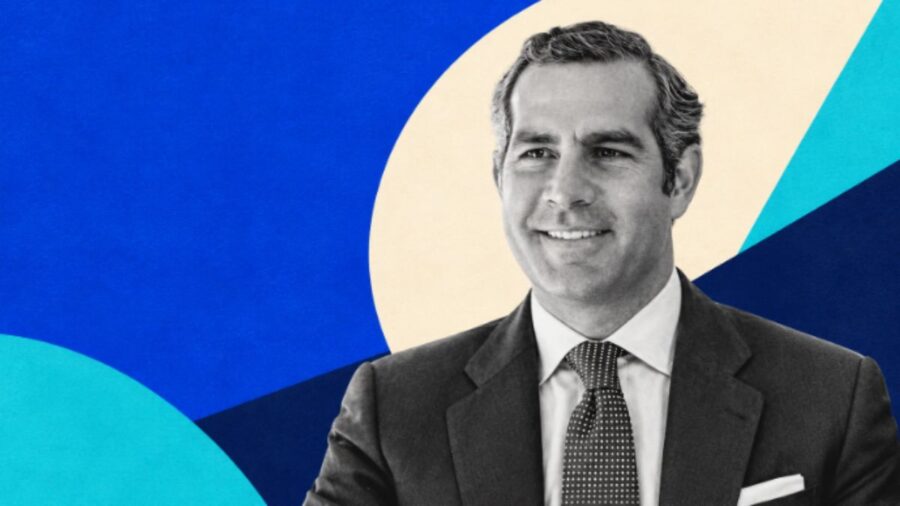
Gonzalo Brujó is Global CEO of Interbrand, the brand strategy consultancy. He previously served as Global President and Global Chief Growth Officer of Interbrand Group, following more than fifteen years helping to expand its business across Europe, Latin America and the Middle East. His experience includes partnering with leading companies, multinationals and public institutions. Interbrand has recently launched its Best Global Brands 2026 report
A good reputation used to be a brand’s insurance policy. Being highly thought of was what carried it through tough times. But while brand reputation still matters, there is a widening gap between those brands resting on their laurels, and those who mould that reputation into a set of principles — a brand constitution, if you will — that provides the blueprint for growth and stability in the future.
NVIDIA is now the sharpest test of that idea. One of the top risers in Interbrand's Best Global Brands 2026, its brand value rose more than 71% this year, taking it into the top 10. Then, on 12 November, Jensen Huang resigned after 33 years as chief executive, following reports of affairs, including with a businesswoman that US officials reportedly suspect of gathering intelligence for Beijing.
While it’s the scandal that’s garnering the newsprint right now, the bigger question will be whether NVIDIA is ultimately bigger than its founder. Our analysis of its position suggests the company’s momentum owes as much to scarcity. When supply eases, will NVIDIA be able to front a philosophy beyond its founder's personality?
