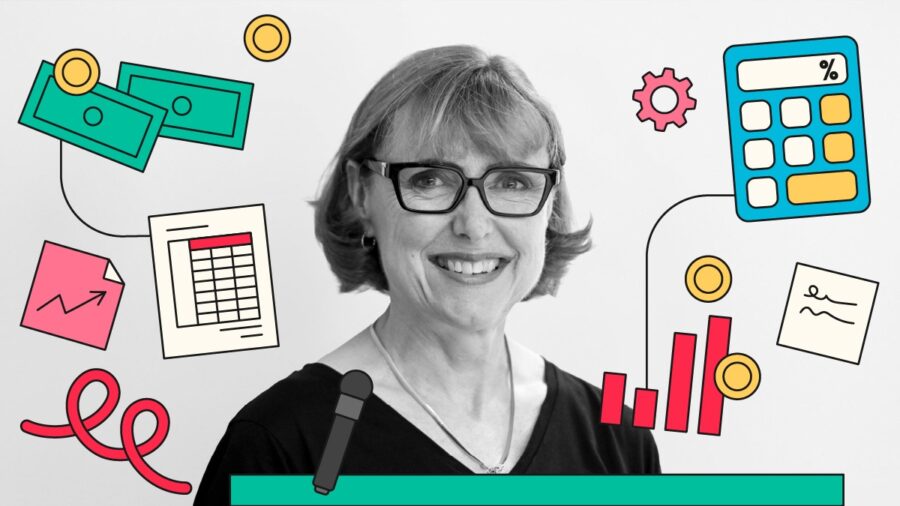
Kay Chaplin is finance director at Mantle Space Limited, a UK-based flexible workspace provider. She joined the company nearly 15 years ago, back when Mantle had just one business centre and the whole team worked under the same roof.
As the business expanded, Chaplin has introduced structure around finance and operations, helping the team move away from manual spreadsheets and into more scalable systems designed for the flexible workspace industry.
Here, she shares how she built her finance career in stages, what she believes modern finance leaders need, and why stepping back from the details can be one of the most important skills in the role.
How did you become a finance leader?
I studied engineering at university, and while I was there I was sponsored by Marconi. A team of us would do big projects each summer and I ended up doing the finances for these. I found that really interesting.
After university, I joined one of the big accountancy firms in a training role. I spent four years in audit and qualified as a chartered accountant, then did four years in tax and four years in management consultancy.
Once I got married and had kids, I thought my accountancy career was probably parked, maybe even forever. Looking after the kids was a full time job and my husband was very busy with work too.
After a big career gap, a friend told me someone she knew had lost their finance person and was looking for someone to fill a small, part-time role. I joined Mantle, and nearly 15 years later I am still here.
What’s the biggest challenge your sector is facing?
The biggest issue for us right now is squeezed margins. Competition pushes desk rates down, but our running costs keep going up.
National insurance, utility costs, and business rates are all rising. Business rates are about to be overhauled, and that is going to affect our industry.
The challenge is how to still deliver a really high level of customer service, which is our USP, with an ever reducing margin.
What single thing do you think would make your job easier?
One thing that has made my job easier is the software we use. We now use a system designed for our industry, so tasks we used to do in spreadsheets are handled in the system.
That means I can spend more time on the interesting work, and my team can too.
The one thing I would still love to change is that banks all have their own ways of doing things. We use a number of banks for different parts of the business, and they all have their own systems and requirements. It is never quite the same.
What is the best bit of business advice you’ve ever received?
The best advice I have been given is to take a step back.
In my job, it is easy to focus on the details, but sometimes you have to stop and ask why you are doing something. Are you doing it just because you have always done it that way? Is there a quicker way? Can technology or AI solve it for you?
Taking that step back helps you see the bigger picture.
Which book do you think every finance leader should read at least once?
A book I have returned to recently is The Power of Habit by Charles Duhigg. It is about making small changes that can have a significant impact.
I revisited it because as we are growing, we are taking on more people and working on how we transmit our culture and values. There is a chapter about Starbucks that really stuck with me. It talks about how they describe themselves as a people company that happens to sell coffee, and how they focus on self discipline and positive customer interactions.
That felt relevant to our industry too because we are like an extension of our members’ offices. Our reception team greets them in the morning and sets the tone for their day.
What’s been your proudest achievement in your current role?
For me, it was changing our accounting software. It does not sound like a big deal, but it was a major transformation, and I worked closely with the team to drive it through.
Our senior team is mainly property people, so they said if I wanted to change it, I should go ahead. I did not realise how much work was involved, but it has been transformational.
It has been tough at times because accounts teams do not tend to be change oriented, but we worked hard and got there. I have even compared it to having a baby. It is hard work while you are doing it, but afterwards you are so glad you did it.
It also made us rethink processes we had kept doing just because we always had. We have been able to cut out layers of work, which gives the finance team and operations teams more time to focus on customers.
It was also outside my comfort zone because I had never implemented a software system before. I had only worked with systems that were already in place.
If you weren’t a CFO, what would you like to do?
I think I would be a tour guide.
Whenever I go to a new city, I try to go on a tour with a local because you learn the inside story. You do not just see the big tourist sites. You learn how people really live, and you hear very personal stories.
That is what I enjoy most.
Kay Chaplin is finance director at Mantle Space Limited, a UK-based flexible workspace provider. She joined the company nearly 15 years ago, back when Mantle had just one business centre and the whole team worked under the same roof.
As the business expanded, Chaplin has introduced structure around finance and operations, helping the team move away from manual spreadsheets and into more scalable systems designed for the flexible workspace industry.
Here, she shares how she built her finance career in stages, what she believes modern finance leaders need, and why stepping back from the details can be one of the most important skills in the role.