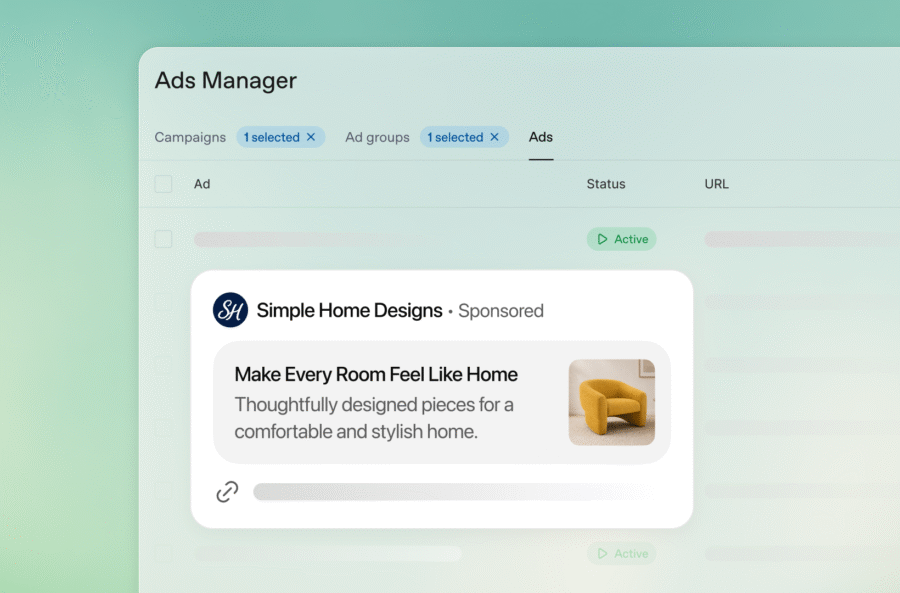
ChatGPT Ads are still in their early stages. As one of a small number of advertisers with early access to trial the platform ahead of its wider rollout, we have had the opportunity to explore how the channel works in practice, from targeting and creative formats to user experience and early performance signals. That early perspective has made one thing clear… ChatGPT Ads aren’t simply another place to buy media; they mark a genuine shift in how people discover information, consider their options, and ultimately make decisions
The biggest change is the nature of discovery itself. Traditional search compresses intent into a keyword. AI conversation does something different; users can explain their situation, ask follow-up questions, refine their criteria and compare options, all within the same exchange.
For marketers, that opens up the possibility of reaching people much earlier in their journey, not only when they’re ready to click a search result, but while they’re still working out what the problem actually is and what matters most to them.
What’s working, and where it’s still maturing
What struck me early on was just how central trust is to this whole experience.
ChatGPT’s advertising experience feels deliberately built around protecting the user relationship. Ads sit apart from organic AI responses and are clearly labelled, so people can tell instantly what is paid and what isn’t. That matters because the success of this model could hinge on whether people find the ads they’re served useful, or intrusive.
Here’s the real point of difference from advertising as we know it; instead of responding only to what someone types into a search box, the system draws on the whole conversation, helping brands appear when they’re genuinely useful rather than simply keyword-matched.
Take running shoes. Someone searching “best running shoes” on Google has already defined their need. In a conversation with ChatGPT, that same person might mention they’re training for their first marathon, have a history of knee pain, need something for wet weather, and are working to a budget. Suddenly you’re not guessing at intent; you’re seeing it laid out in front of you, creating a real opportunity to be relevant in a way that keyword-matching never allowed.
How ads will find you, compared to Google and Meta
In my view, the biggest shift is that ChatGPT Ads move away from traditional audience targeting and towards understanding the situation someone is actually in. Instead of asking “who is this person and what have they done before?”, the question becomes “what are they trying to solve right now?” This creates a far more direct line between a person’s immediate need and the brand in front of them.
But it cuts both ways. While this can help brands show up at meaningfully relevant moments, advertisers currently have far less control over exactly who sees their ads than on platforms like Google and Meta, which have years of behavioural data to draw on.
The trade-off is that the technology is a work in progress. At this stage, ad formats are limited, leaving little room for brands to stand out, and the measurement tools needed to prove and improve performance are still being built.
What it costs, and what it means for your privacy
As with any new advertising channel, cost is front of mind. Pricing is starting to settle around familiar structures like cost-per-click, but the early numbers I’ve seen are relatively high given how little control and optimisation is currently on offer; a gap that should narrow as the platform matures.
Privacy will shape this channel just as much as cost. Unlike most advertising environments, ChatGPT Ads sit apart from AI-generated responses, and conversations aren’t shared directly with advertisers. In the UK and EU, personalised advertising also requires explicit user consent, meaning advertisers will likely lean more on the context of the conversation itself than the deep behavioural tracking that’s underpinned digital advertising until now.
That could mark a real turning point for the industry. Success may depend less on knowing everything about someone’s past behaviour, and more on understanding what they need at the exact moment they’re asking for help.
Why I think marketers should start testing now
None of this means brands should shift significant budget into ChatGPT Ads tomorrow. What it does mean is that there’s real value in learning while the channel is finding its shape.
The brands experimenting now will understand the platform, what messaging lands, and where it fits into the wider media mix, before things get competitive. That head start will be much harder to earn once everyone else catches on.
Right now, ChatGPT Ads shouldn’t be treated as a replacement for the platforms brands already rely on, or approached expecting instant scale. The smarter move is to experiment – start with a controlled budget, measure what happens, and build knowledge from there.
The opportunity today isn’t scale. It’s experience.
ChatGPT Ads won’t transform digital advertising overnight. But they mark a real shift in how brands connect with the people who might buy from them. The marketers paying attention now will be the ones ready to move when the channel matures.
ChatGPT Ads are still in their early stages. As one of a small number of advertisers with early access to trial the platform ahead of its wider rollout, we have had the opportunity to explore how the channel works in practice, from targeting and creative formats to user experience and early performance signals. That early perspective has made one thing clear… ChatGPT Ads aren't simply another place to buy media; they mark a genuine shift in how people discover information, consider their options, and ultimately make decisions
The biggest change is the nature of discovery itself. Traditional search compresses intent into a keyword. AI conversation does something different; users can explain their situation, ask follow-up questions, refine their criteria and compare options, all within the same exchange.
For marketers, that opens up the possibility of reaching people much earlier in their journey, not only when they're ready to click a search result, but while they're still working out what the problem actually is and what matters most to them.