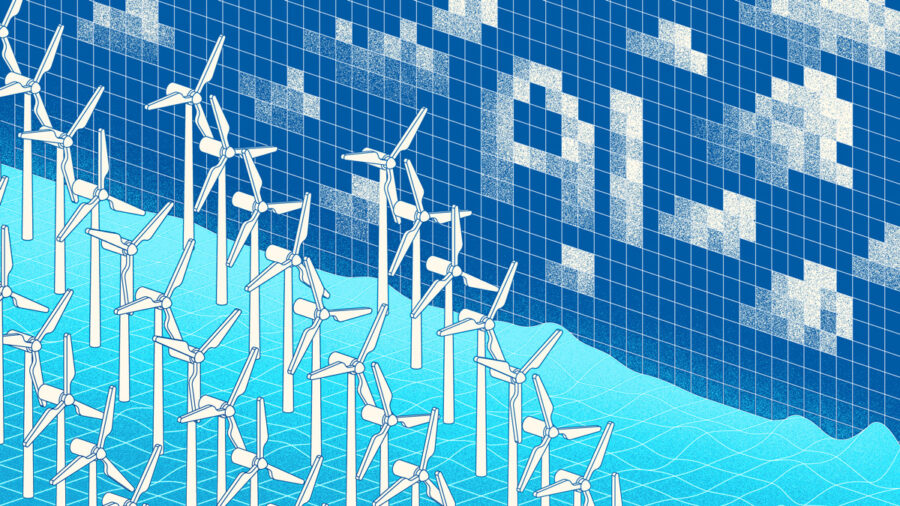
The traditional marketing playbook says you showcase the sleek user interface and hide the messy, industrial plumbing. But as generative AI faces growing scrutiny over its environmental footprint, hiding the plumbing has become a brand liability. A growing number of European technology companies are flipping the script. In a market wary of greenwashing, showing how digital services are powered—and proving they run on local, renewable energy — is becoming a competitive advantage.
According to Gartner, worldwide data centre electricity consumption is projected to reach 565 terawatt-hours (TWh) before surpassing 1,200 TWh by 2030. With AI workloads driving unprecedented demand for computing power, electricity is no longer just a back-office concern. It is becoming a business constraint.
For enterprise buyers, AI procurement now extends beyond performance and cost
For enterprise buyers, AI procurement now extends beyond performance and cost. Organisations pursuing ambitious climate targets now realise that the infrastructure behind enterprise software is becoming part of the procurement conversation. Renewable energy partnerships, once viewed primarily as compliance measures, are becoming visible signals of trust, transparency and competitive differentiation. In the AI economy, infrastructure is becoming part of the brand itself.
Energy procurement was once a back-office function. Companies signed power purchase agreements, disclosed them in sustainability reports and moved on. Artificial intelligence is changing that. As AI drives electricity demand, enterprise buyers are paying closer attention to how the software they buy is powered.
From silent procurement to front-facing equity
The shift is no longer limited to hyperscale technology companies. Platforms such as Granular Energy are helping regional utilities offer 24/7 hourly-matched renewable electricity tariffs to mid-sized businesses, making locally sourced renewable energy more accessible. Sustainability credentials once reserved for the largest technology firms are becoming accessible to smaller businesses.
The commercial appeal of renewable procurement, however, does not automatically translate into broader environmental gains. According to Alex de Vries, founder of Digiconomist, an independent research platform that examines the unintended consequences of digital technologies, “Giving the tech sector a larger share of the available renewable electricity doesn’t make the system any cleaner overall.” With AI-driven electricity demand growing, he argues that expanding renewable generation — not simply reallocating existing clean energy — is what ultimately delivers meaningful decarbonisation.
That distinction matters for companies positioning clean energy as part of their brand. As de Vries points out, “In that sense, there is a real risk that renewable procurement becomes more of a marketing tool than a driver of genuine sustainability.” The challenge is no longer communicating infrastructure choices, but proving that they withstand scrutiny from customers, investors and regulators.
Compliance as a competitive advantage
Europe’s regulatory landscape is becoming a source of competitive advantage rather than merely a cost of doing business. The EU AI Act, the Corporate Sustainability Reporting Directive (CSRD) and broader data sovereignty requirements are encouraging technology companies to compete on transparency as well as performance.
The European Commission’s Cloud Sovereignty Framework reflects that shift by linking environmental sustainability with digital sovereignty. Companies such as Scaleway are already using this approach to strengthen their market positioning, combining European data residency with strong environmental performance to build trust among customers in regulated industries.
As regulatory expectations evolve, compliance is becoming more than a legal obligation. It is becoming a means for technology companies to demonstrate credibility, strengthen customer trust and differentiate themselves in an increasingly competitive AI market.
From financial instruments to regional growth
Corporate power purchase agreements (PPAs) are evolving beyond financial instruments into strategic investments. As AI drives electricity demand, they increasingly help finance new renewable generation while supporting Europe’s energy transition.
The partnership between Siemens Energy and EnBW illustrates this shift. Their work on Germany’s He Dreiht offshore wind project shows how major energy investments can support growing AI power demand. By adding large-scale renewable generation to the grid, projects such as He Dreiht help expand the supply of low-carbon electricity needed to support power-intensive AI workloads.
For enterprise customers, those investments signal more than environmental responsibility. They signal a long-term commitment to regional resilience, making infrastructure investment another source of competitive differentiation.
The physical stack as the B2B moat
Data centres have long been invisible to customers. As AI becomes more energy-intensive, the infrastructure behind it is becoming part of the product enterprise buyers evaluate.
The collaboration between pan-European edge data centre operator nLighten and the FEEM Foundation reflects this shift. Their Integrated Carbon-Free Energy (ICFEn) Score broadens the definition of digital sustainability beyond operational efficiency to include how data centres support the wider energy ecosystem. Rather than focusing solely on how efficiently a facility consumes electricity, it also considers how closely its energy use aligns with the availability of carbon-free electricity on the wider grid.
Purchasing decisions are still overwhelmingly driven by performance, functionality and cost
Demonstrating that value, however, remains difficult. De Vries mentions that “At the moment, major AI companies provide very little information that would allow meaningful comparisons, so proper environmental due diligence … is often impossible.” He adds: “As a result, I think purchasing decisions are still overwhelmingly driven by performance, functionality and cost, simply because sustainability cannot be assessed in a robust way with the information currently available.”
That may not remain true for long. As AI capabilities become commoditised, providers that can demonstrate how their infrastructure advances energy resilience, sustainability and regulatory objectives will stand apart. The physical stack is no longer just the foundation beneath an AI service — it is becoming part of the value proposition itself.
A new blueprint for AI leadership
As AI reshapes enterprise technology, enterprise buyers will increasingly judge companies not only by what their products can do, but by how they are built and powered. Renewable energy partnerships, transparent infrastructure and responsible operations are becoming strategic brand assets.
For European technology companies, the opportunity extends beyond sustainability. Those that can demonstrate credible, resilient infrastructure will be best positioned to earn trust and differentiate themselves in an increasingly competitive market. In the AI economy, invisible infrastructure is becoming one of the most visible expressions of a company’s brand.
The traditional marketing playbook says you showcase the sleek user interface and hide the messy, industrial plumbing. But as generative AI faces growing scrutiny over its environmental footprint, hiding the plumbing has become a brand liability. A growing number of European technology companies are flipping the script. In a market wary of greenwashing, showing how digital services are powered—and proving they run on local, renewable energy — is becoming a competitive advantage.
According to Gartner, worldwide data centre electricity consumption is projected to reach 565 terawatt-hours (TWh) before surpassing 1,200 TWh by 2030. With AI workloads driving unprecedented demand for computing power, electricity is no longer just a back-office concern. It is becoming a business constraint.
For enterprise buyers, AI procurement now extends beyond performance and cost