Europe has no shortage of scientific talent. The harder task is turning that expertise into companies capable of reaching the market.
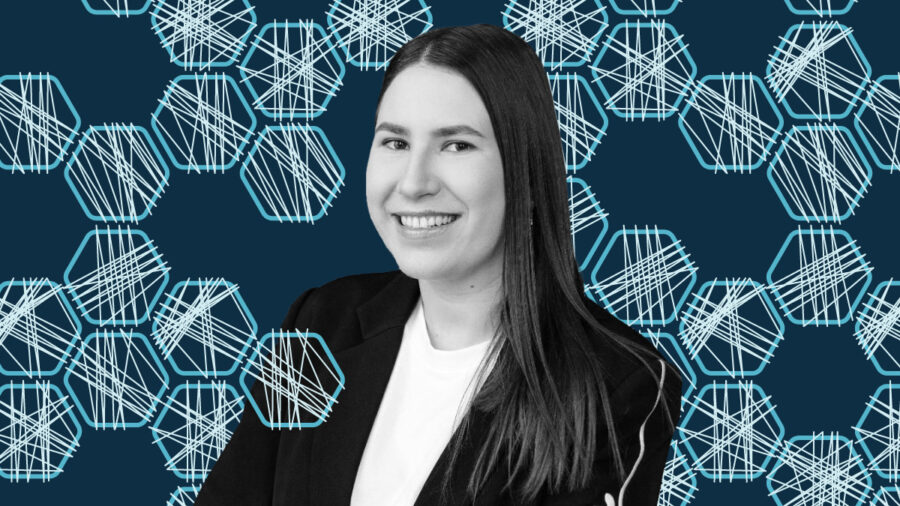
For women founders, there can be another hurdle: being taken seriously in the first place. Jekaterina Romanova, CEO of Latvian deep-tech startup PrintyMed, encountered that problem early in her career while raising money and building businesses in sectors dominated by older professionals.
The cost of being underestimated
Romanova moved into startups after studying economics and working in banking. Her first venture came almost by accident. At university, she joined an incubator with an idea for a mortgage platform, only to discover that applicants had to apply as teams. A message in the university chat led her to a co-founder and a new venture focused on posture-correction T-shirts.
That began a decade-long career in startups, eventually leading Romanova to PrintyMed. The company is developing biomimetic spider-silk technology to build tiny medical materials, including organ-on-a-chip membranes, and artificial organs and scaffolds to address the global shortage of transplantable organs
Her financial background has proved useful. “For business, you need to know the numbers, you need to count them well,” she says. But much of what she knows about building companies came through experience. “I prefer to learn by doing.”
Starting young, however, came with a disadvantage. As an 18- or 20-year-old woman approaching investors and medical professionals, Romanova says she found that “they are not taking you seriously at all”.
For business, you need to know the numbers, you need to count them well
She learned not to take rejection personally. Instead, she treated it as a numbers game, trying to “collect as many noes as you can” because repeated attempts increase the probability of eventually getting a yes. Her persistence, she says, is partly down to being “stubborn in the good way”.
Years later, some people still mistake her for someone much younger. But time in the sector has given her something that cannot be established in a first meeting: a track record. “When you are so long time in this game, it also shows some kind of your commitment,” she says.
Women TechEU has also helped. PrintyMed was among the programme’s beneficiaries, and Romanova says the value went beyond funding, providing mentors, peers, industry connections and recognition.
From science to business
For Romanova, turning scientific expertise into a viable business requires different forms of expertise to work together.
“In your team, you need to have a scientist who is doing science and you need to have a businessman who is doing business,” she says. Scientists and business leaders have different ways of approaching problems and need to respect each other’s areas of competence.
At PrintyMed, Romanova occupies the commercial side. She says her scientific colleagues can sometimes be cautious about taking risks, preferring to study an opportunity thoroughly before moving towards commercialisation. Her instinct is to move faster: “I’m trying to take all those actions much quicker. I’m trying to take all the opportunities.”
In your team, you need to have a scientist who is doing science and you need to have a businessman who is doing business
That approach helped push PrintyMed towards an EIC Pre-Accelerator application that Romanova’s colleagues initially considered premature. The company subsequently secured €500,000 through the programme.
The same discipline applies to spending. Early-stage deep-tech companies can face long development cycles while operating with limited capital. “You have a very, very limited amount of money all the time,” Romanova says. “You are almost dying, to be honest.”
The funding gap
Romanova says the funding environment can be particularly difficult for deep-tech companies in Latvia.
Local programmes can require significant co-financing, meaning companies still in R&D may need to commit their own money before receiving public support. European programmes offer another route, but competition is intense, particularly for companies from smaller countries.
But capital is only part of the challenge.
Latvia has strong scientific capabilities and researchers working on promising technologies, Romanova argues. The missing link is often what comes afterwards: turning research into companies. “We have quite a lot of good scientists,” she says. “We are doing a lot of different interesting research, but then what is the next step for the commercialisation, for making the spinouts and so on?”
There are signs that Latvia is trying to address that gap. On 14 July, the government approved new rules establishing a clearer framework for state scientific institutions to commercialise know-how, technologies and inventions created through publicly funded research. The government said the previous lack of unified rules had created legal uncertainty and hindered technology transfer from laboratories to business.
For Romanova, though, more needs to change around financing, grants and the structures that help scientists move from research into entrepreneurship.
Success stories matter
Romanova is optimistic about the future of women in deep tech. She points to Latvia as an example of a market where women are well represented in science and senior positions, while acknowledging that the picture differs across Europe and the wider world.
Her argument is ultimately about visibility. More women need to see that building a deep-tech company is possible. She expects to see “more and more different success stories” from women in the sector, which she believes will encourage the next generation to study STEM and eventually found companies of their own.
For Romanova, those stories could help make deep tech a more attainable path for the next generation of of founders.
“We are on a good way and just we need to continue moving forward,” she says. “I think definitely, soon, we will hear the great success stories of the women in deep tech.”
Europe has no shortage of scientific talent. The harder task is turning that expertise into companies capable of reaching the market.
For women founders, there can be another hurdle: being taken seriously in the first place. Jekaterina Romanova, CEO of Latvian deep-tech startup PrintyMed, encountered that problem early in her career while raising money and building businesses in sectors dominated by older professionals.