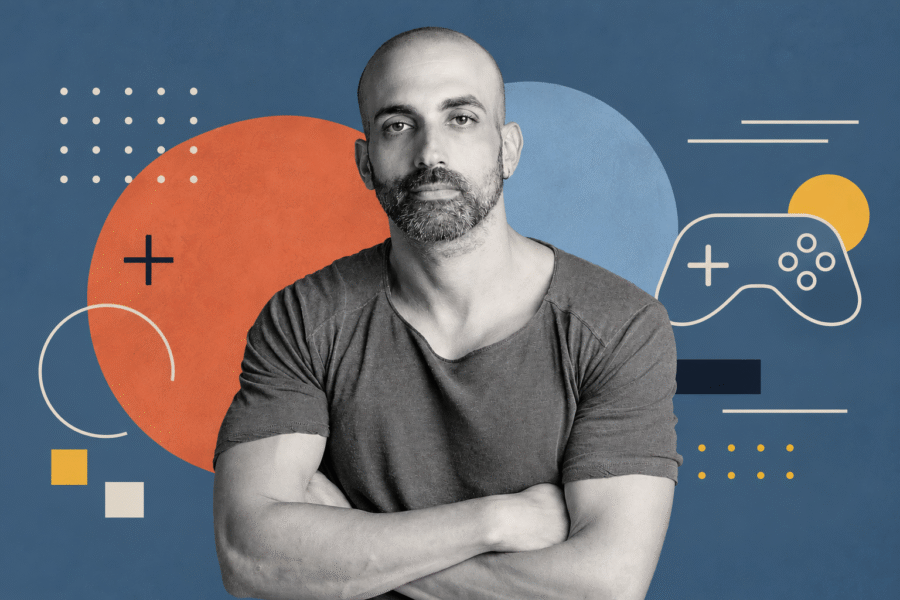
Candidly, Maor Sason admits that he’s the wrong person to ask about the influence of gaming on children. He grew up playing Nintendo and later PlayStation — “pretty excessively,” he says — and credits it with shaping his personality. But when it comes to the influence of gaming on commerce, he’s happy to share his opinions.
The 36-year-old is now immersed in the business of games. As co-founder and chief executive of Appcharge, he helps mobile game publishers sell virtual goods directly to players, without relying solely on Apple and Google’s app stores.
After completing his degree, Sason founded an advertising network serving the mobile gaming industry. “It was a cool journey,” he recalls, but he “always had the dream to build a global company.”
He found his opportunity as Epic Games took Apple to court over its app-store restrictions. The dispute prompted Sason to look more closely at publishers selling directly to customers, including Israeli gaming company Playtika. He was struck by the commissions Apple and Google charged on some digital transactions, historically as high as 30%.
“Which is bonkers,” he says. “It’s like another state tax that you need to pay.” He argues that such charges weigh heavily on developers and restrict competition.
In 2022, Sason joined forces with Roei Barassi to found Appcharge, which helps game publishers establish their own sales channels. The company provides web stores and payment infrastructure, handling services such as tax compliance and fraud prevention. It also acts as the merchant of record, taking responsibility for payments and related compliance.
For studios without dedicated payments teams, those services can make the difference between running their own sales channels and remaining dependent on established platforms. Appcharge raised $58m in Series B funding in 2025.
Europe’s gaming advantage
Europe was among Appcharge’s first priorities. Its backers include Play Ventures, with links to Finland and Singapore, and Sweden’s Creandum. The company opened a Helsinki office in 2025.
“We have a big team in Europe,” Sason says. Its first regional sales hire was a vice-president for Europe. He explains that many successful mobile game developers are based on the continent, even when much of their revenue comes from customers elsewhere, particularly in the US.
“Europe has always been a pioneer,” he says. He traces Finland’s gaming history from Snake on Nokia phones to the international success of studios such as Supercell. “Finland, such a small country and such a big gaming hub.”
European developers now face stronger competition from Asia.
“I think European developers are still innovative,” Sason says, but the cultural differences that previously made it difficult for Asian studios to reach Western audiences are becoming less significant. “You can see very successful developers all across Asia Pacific.”
Appcharge has worked with London-based Tripledot Studios to introduce direct commerce into its games business, including work involving the portfolio Tripledot acquired from AppLovin.
“It’s not an easy job to integrate these solutions,” Sason says. The combined portfolio required “heavy lifting” from both sides, and he credits Tripledot with making progress despite the complexity of bringing together different studios and games.
Even when publishers can move payments to their own web stores, they must persuade players to complete purchases there. Any savings from app-store commissions also have to be weighed against payment processing and other operating costs.
For European publishers, regulation is changing the available options. Apple’s revised EU payment terms, introduced in October, allow alternative payment routes but retain commissions on many transactions. Google introduced UK changes in June, while the Competition and Markets Authority is considering further requirements.
Sason’s assessment is measured.
“The change in the fees was not monumental,” he says, nor has he seen much in the way of immediate change in publishers’ plans, although he expects more developers to use external payment providers. “It’s not as big as we have expected it to be.”
Unlocking new markets
Appcharge is now planning to enter other consumer-app markets in 2027. Sason cites wellness, short-form dramas and utility software, sectors in which subscriptions often matter more than virtual items sold inside games.
“We’ve been talking to quite a lot of businesses to plan our strategy for consumer apps,” he says. “European developers are a part of our plan. It’s the natural jump for us.” There are also design partners, though he declines to identify them at the moment.
Selling subscriptions directly presents different challenges from selling virtual items in games.
“They need to have a web presence and a payment flow,” including a way for customers to subscribe or renew, Sason says. Developers must then measure whether sending customers to a website is worthwhile once abandoned purchases are taken into account.
“Many developers in earlier stages, they’re preoccupied about growth, not about optimising the margins,” he says. Sason argues that Appcharge must show businesses why the two are connected. “The direct-to-consumer flow is a part of their growth because eventually the dollars that you save are going directly to user acquisition.”
Not an easy game to play
Sason remains closely involved in daily operations, despite spending an estimated five or six months abroad each year meeting colleagues and customers. On office days, he starts answering emails and making calls before walking to headquarters. There, he greets colleagues in the open-plan workspace before going “straight up to meetings”.
Is he still hands-on with the business?
“All hands on,” he says. “Of course.”
But he is less interested in personal recognition.
“I want Appcharge to be remembered,” he says. “Not me as a person.”
His aim is to help developers “own their users and the relationship with their users.” When he started Appcharge, he recalls, it was “very scary even to think about” selling directly without paying the commissions publishers had long accepted.
Now, direct selling is “a part of the conversation” for game developers. Sason wants businesses across the wider app industry to be having that conversation too.
Candidly, Maor Sason admits that he’s the wrong person to ask about the influence of gaming on children. He grew up playing Nintendo and later PlayStation — “pretty excessively,” he says — and credits it with shaping his personality. But when it comes to the influence of gaming on commerce, he’s happy to share his opinions.
The 36-year-old is now immersed in the business of games. As co-founder and chief executive of Appcharge, he helps mobile game publishers sell virtual goods directly to players, without relying solely on Apple and Google's app stores.
After completing his degree, Sason founded an advertising network serving the mobile gaming industry. “It was a cool journey,” he recalls, but he “always had the dream to build a global company.”
