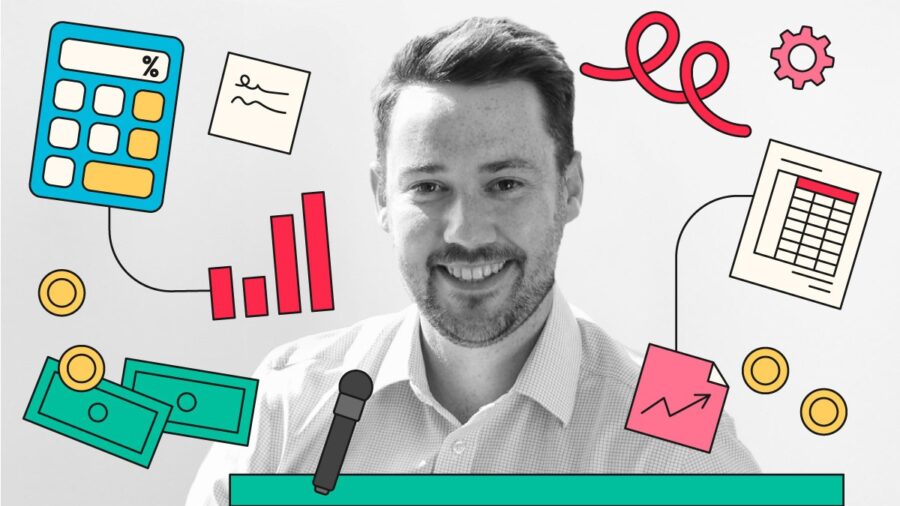
Pete Fendell is chief finance and operating officer at DSW Capital, a UK-based financial advisory firm. He oversees both the financial side of the business and the day to day operations that keep the wider platform running smoothly.
Fendell’s team supports a growing network of independent businesses, helping them think through growth decisions and next steps, whether that means hiring, expanding their services, or planning for what comes next in a changing market.
Here, he shares how mentorship, people skills and adaptability, not just technical expertise, shaped his rapid ascent to CFO.
How did you become a CFO?
I became a CFO a lot quicker than I anticipated. I started my career at Deloitte, where I worked with some of the brightest professionals in the region and got exposure to some phenomenal companies through audit work and advisory projects. I was on a strong trajectory there, but my dad, who was also an audit partner, encouraged me to think about how the sector had changed and whether it was the right long term path for me.
That’s what pushed me to look at opportunities outside Deloitte, and that’s where DSW Capital came up. When I joined, a former colleague was the CFO, and I knew I would have a great mentor. Within my first four months, we took the company public and listed on the Alternative Investment Market, which was intense but helped me get up to speed fast. Over time, my experience grew, and when my predecessor moved on, the board promoted me into the role. I was 32 at the time, and I felt very fortunate for the people who supported me and believed I could do the job.
What skills or traits does a good finance leader need?
Financial skills are a given. You need to be all over your numbers and comfortable with them. But what stands out most to me is people skills and communication skills.
You often hear that someone is good with numbers but not comfortable speaking to people. For me, getting the most out of the people around you is really important. If you can’t educate, share knowledge, and bring your team up with you, you won’t have the ability to grow. A lot of people can do numbers, but fewer can do people management, relationship building, and communication.
What’s the biggest challenge facing your sector at the moment?
For me, it’s technology and the speed at which it’s changing. A few years ago, big corporations and larger competitors were investing huge sums developing their own technology, and that created a barrier to entry for businesses like ours.
Now the landscape has changed. There is so much software available that the challenge is working out what to choose, and what will help immediately. You are also making a call on what to invest in, while knowing something else could overtake it quickly and you might have to change systems again. You have to be agile and dynamic.
What single thing do you think would make your job easier?
A stable macroeconomic environment would make my life ten times easier. We have businesses trying to win work, and there are always peaks and troughs, but the landscape is rapidly evolving. You do not know what will be announced next by the government, or what will happen globally, and what the knock on effects will be.
We have had about five years of disruption with the Covid-19 crisis, Ukraine and the UK’s mini budget that led to interest rate spikes. I think people are looking for a period of no change, even if things do not improve dramatically, just so they can plan ahead. We have another budget coming in November, and there is already speculation about what it will mean, including potential tax rises and wider implications.
What is the best bit of business advice you’ve ever received?
For me, it’s about prioritising the right things. There’s a quote I read a while ago that doing something unimportant does not make it more important. If I’m working on something that is taking a long time, I try to challenge myself and ask if it is genuinely important and whether it will have the impact I want. If not, it probably does not need to be gold plated. It can be good enough and it can go now.
Which book do you think every finance leader should read at least once?
One book my coach recommended is called The First 20 Hours: How to Learn Anything Josh Kaufman. The principles are covered in the first part of the book, and the rest are examples of where it has worked.
I recommend it because the role of a CFO is broad and the demands keep increasing. Being able to brush up on an area quickly is important, especially with topics like artificial intelligence coming up in conversations so often. It’s about building skills and adapting, without it taking too long to read.
What’s been your proudest achievement in your current role?
Being promoted to CFO at 32. At the time, I thought it was just the next step. It was only through peers, colleagues and family that I realised what an achievement it was. People pointed out that I was one of the youngest CFOs of an AIM listed business in the UK, and most people are 40 plus before they get to that point. With hindsight, that is something I’ll look back on as a huge achievement.
Since then, we’ve had one of our busiest years on record, including the biggest trading month in the company’s 23 year history.
If you weren’t a CFO, what would you like to do?
I have a strange answer. When I was finishing my degree, I was at a crossroads. I could either become an accountant, which runs in my family, or become a musical theatre performer.
I nearly went down the musical theatre route. I auditioned for drama schools and started getting call backs, but then I panicked about the lifestyle, the travel, and how competitive it is, and I decided I did not want that lifestyle. So I became an accountant instead of being on the stage.
I auditioned for the Liverpool Institute of Performing Arts, and ten years later I joined the board of the university. So I’ve managed to bring some of that world back into my life in a different way.
Pete Fendell is chief finance and operating officer at DSW Capital, a UK-based financial advisory firm. He oversees both the financial side of the business and the day to day operations that keep the wider platform running smoothly.
Fendell's team supports a growing network of independent businesses, helping them think through growth decisions and next steps, whether that means hiring, expanding their services, or planning for what comes next in a changing market.
Here, he shares how mentorship, people skills and adaptability, not just technical expertise, shaped his rapid ascent to CFO.