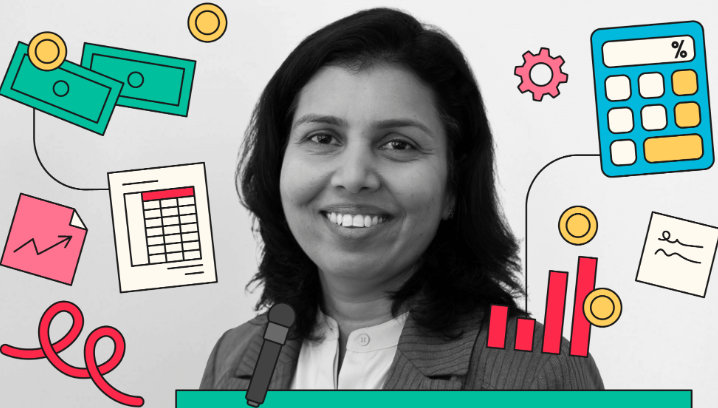
Shilpa Kaluti is CFO and co-founder of Scrumconnect, where she plays a central role in shaping the company’s growth and operational direction. Along with her finance responsibilities, she works closely with leadership to align strategy with the needs of the business.
Her background spans across engineering, enterprise systems, and consulting, which continues to influence how she approaches financial decision making today. She focuses on connecting data, strategy, and execution to support long term growth.
In this conversation, Shilpa reflects on her unconventional path into finance, the evolving expectations of CFOs, and the practical challenges of scaling a business.
How did you become a CFO?
I describe myself as an accidental CFO. I dont hold a finance degree. I am actually a software engineer by education. I always loved math, which is why I went into engineering. Early in my career, I was deep into technology.
I developed products, mainly ERP products that help business processes, and I was put into the finance module. That was the first real window that gave me insight into business finance. Coming from an engineering background, I didn’t know much about finance, but when you are developing a finance module, you need to understand what it means for a business when you are gathering user requirements.
That’s how I started understanding business finance. Then I moved into consulting and business development roles, which gave me more opportunities to engage with businesses. I worked closely with founders, sitting in boardrooms discussing the problems they were facing and how the product could help solve them.
Then I started understanding the numbers, the risks, and how leaders make decisions. When we started Scrumconnect, based on that experience, it was natural for me to take up the CFO function so I could understand where the business was heading, what investments were needed, and how to build the right operating rhythm.
What skills or traits does a good finance leader need?
It’s not just about numbers. A CFO should be a catalyst for change. You need to be part strategist, operator, and translator.
When you have the financial numbers, you need to explain what they mean to the organization and the CEO, and help support the CEO’s vision. There needs to be strategic thinking so you can connect the financial reality of the business to its long term direction.
It’s a balancing act between the CEO’s vision and the reality of the numbers and market conditions. The CFO brings that reality check.
What excites you most about your current role?
Being both a co-founder and the CFO is very exciting. It is not just about acting like a CFO. As a co-founder, I have the ability to help shape the growth of the business and define the strategy with the CEO.
That comes with the authority to make bold decisions. Because I understand the numbers and also have that position as a founder, I can help decide where to invest and how we grow.
What’s the biggest challenge facing your sector at the moment?
For any business to be successful, there are some fundamentals like people, systems, and processes. We have a strong and talented team, and we are aiming to grow from a 40 million company to a 100 million company in the next couple of years.
To reach that, we need the right people and the right processes. Our systems have supported us so far, but they may not support the next stage of growth.
We are at a phase where we need to rethink our systems and processes. We have chosen Workday as an integrated system across business processes and departments, which will help support this growth. The challenge is redefining processes and upskilling the team so we can use these systems effectively.
What single thing do you think would make your job easier?
AI is going to make life much easier. It will act like a digital assistant. The things we used to do manually can now be done faster, which allows us to focus more on strategy and decision making.
For me, not coming from a finance background, AI and automation will be very useful. It will help generate insights and support faster decision making instead of spending time working through numbers manually.
What is the best bit of business advice you’ve ever received?
If you have a strong idea or a desire to do something, it is better to start early. The world is moving fast, and innovation is happening even faster. If you keep thinking about an idea, someone else will act on it.
Take the risk and start. Once you are on the journey, things fall into place.
What do you do outside of work to protect yourself from burnout?
I am a hands on mom of two girls, so they keep me busy.
I also have a passion for sewing. When I was young, I used to make things for my dolls from whatever fabric I could find. I still enjoy it today. If I have time, I go into my sewing room and work on something.
It feels like meditation. You focus on creating something, and when you see the final product after spending time on it, it is very satisfying.
What’s been your proudest achievement in your current role?
Setting up Scrumconnect from the ground up to where it is today as a 40 million company is one of my proudest achievements.
Another is the full cycle I have experienced with ERP systems. I started my career building a product, then moved into consulting and selling it, and now I am in a position where I make decisions about buying and implementing ERP systems in my own company.
That journey from a technical role to a business role, and experiencing the full cycle, is something I feel very proud of.
If you weren’t a CFO, what would you like to do?
Something to do with textiles or fabrics. I love creating things. In the future, I would like to do something related to sewing or crafts.
What is currently inspiring you today and why?
I am fascinated by how AI is transforming our lives.
When we were young, we relied on memory and people around us. Now, everything is instantly accessible. You can search for anything and get answers immediately.
The way life is changing and how easy things are becoming is very interesting. I think AI will have a big impact on the future, especially for the next generation
Shilpa Kaluti is CFO and co-founder of Scrumconnect, where she plays a central role in shaping the company’s growth and operational direction. Along with her finance responsibilities, she works closely with leadership to align strategy with the needs of the business.
Her background spans across engineering, enterprise systems, and consulting, which continues to influence how she approaches financial decision making today. She focuses on connecting data, strategy, and execution to support long term growth.
In this conversation, Shilpa reflects on her unconventional path into finance, the evolving expectations of CFOs, and the practical challenges of scaling a business.