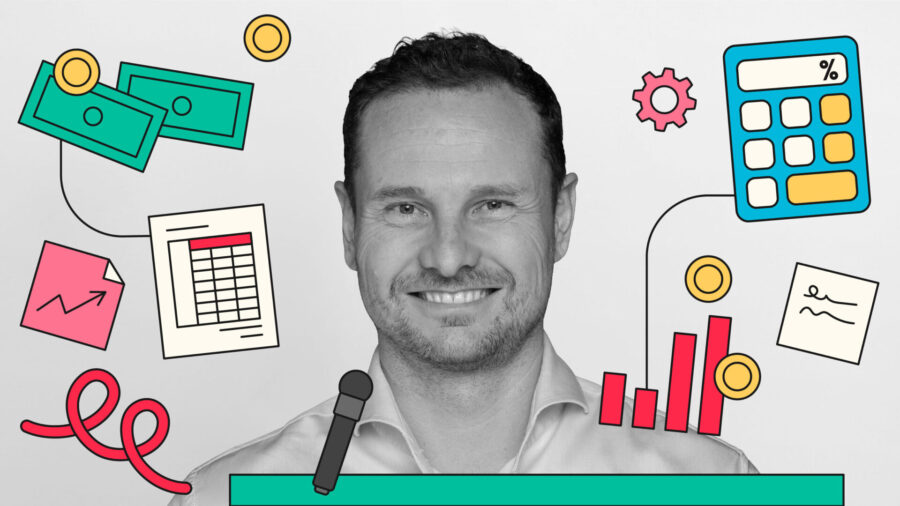
Peter Grausgruber is the former CFO and COO at Fourthline, which is a Know Your Customer (KYC) identity provider headquartered in Amsterdam. Fourthline specializes in AI-driven digital identity verification and supports fintechs across Europe by providing identity verification services along with onboarding solutions that help prevent fraudulent activity.
In his dual position, Peter oversaw both finance and operations, combining strategic oversight with hands-on operational leadership. He has worked extensively in high-growth fintech and compliance-focused technology businesses, helping financial institutions meet regulatory and identity verification requirements. His main focus has been directed toward building scalable financial structures that support long-term growth.
In addition, Peter brings experience in investor relations and international expansion, and has led broad finance functions spanning across accounting, treasury, FP&A, and tax during periods of organizational growth.
How did you become a CFO?
I did not originally expect to become a CFO. It was not something I specifically planned, but things develop over time.
I worked for many years in financial advisory and consultancy, gaining experience across different industries and company sizes. I saw many areas of finance, which made me quite versatile.
I later moved into a large oil and gas company as Head of Strategy, where I was responsible for M&A, portfolio management, and major investment decisions.
After that, I joined Bitpanda as CFO at an early stage. We scaled the business significantly and grew revenue into the hundreds of millions. I was also responsible for operations and became deeply involved in the KYC space. From there, I moved further along the value chain and joined Fourthline, taking on both finance and operations.
I believe you don’t need to plan to become a CFO. What matters most is doing your best, exploring new things, and continuing to learn. The rest comes naturally.
What skills or traits does a good CFO need?
In the scaleup space, it is about hyper growth. Companies often prioritise strong growth, sometimes even over profits, although that has changed a bit recently. In that environment, the old picture of a CFO who only focuses on audits and bookkeeping does not work like it once did.
You need to go beyond that. The role is about connecting strategic vision with actual company performance. You need to be the link between those two dimensions. If the CEO envisions the next step for the company, the CFO needs to connect that vision to where the company stands today.
You also need to act as a facilitator and moderator at the executive level. Everyone needs to understand the strengths, the pain points, and what is most important. The CFO is a key advisor to the management and executive team, and also plays an important role with the board and investor relations. It is ultimately about translating strategy into execution and understanding what will actually help achieve it.
What excites you most about your current role?
The space we operate in is fundamentally transforming. Digital identity, biometric identification, and digital wallets are changing how onboarding works.
In the future, you might have your own digital wallet and use that to identify yourself across platforms. The industry will look very different in ten years, maybe even sooner.
At the same time, AI is being used in many ways, including fraud. Being at the forefront of innovation in such a fast-changing space is very exciting.
What’s the biggest challenge facing your sector at the moment?
A lot of changes are happening at the same time. AI is changing how people work and how fraud is attempted.
Also, the regulatory landscape is evolving across multiple jurisdictions, particularly in Europe. Europe is leading in the digital identity space, but it consists of many countries with different legislation.
The challenge is finding the balance between regulation and market needs. Regulation can be perceived as a hurdle when onboarding customers, but you need to mediate between compliance and customer experience. The goal is to ensure proper identification while still delivering a good and efficient process.
What single thing do you think would make your job easier?
AI tools have massive support potential. They can stimulate speed and improve accuracy in numbers and business analysis.
In bookkeeping, automation tools can recognize transactions and complete processes automatically. Closings can potentially be done in seconds rather than days.
This will fundamentally change companies and also transform the requirements for a CFO. As a CFO, you need to be at the forefront of understanding how to use these tools and implement them effectively.
What is the best bit of business advice you’ve ever received?
I may not have received it as a direct piece of advice, but what I have learned is that people build successful businesses.
Even in the age of AI, having the right people is critical. I would summarise it as investing in people and investing in relationships.
Make sure you have the right people on board. Coach them and give them the space where they can be most effective. Promoting someone endlessly does not necessarily help them. You need to give them the right challenges and the right environment so they can perform at their best.
The strongest team will determine whether you become the best company.
Which book do you think every finance leader should read at least once?
I would not limit it to a finance book.
One book that impressed me a lot was Blue Ocean Strategy. It explains how to escape brutal competition by creating your own market space. It changed how I thought about positioning and strategy.
Another important book, especially in the scale-up space, is Zero to One by Peter Thiel. It explains how to scale rapidly without breaking and how to grow at high percentages year after year. That requires a different mindset and different management approaches.
What do you do outside of work to protect yourself from burnout?
The most important thing is to do what you love. You can work fewer hours and still burn out if there is psychological stress. Loving what you do protects you.
I also enjoy sports. They bring creativity and discipline. When you train regularly, that discipline transfers into your professional life.
Spending time with family and friends is also essential. It helps you mentally recover and keeps you balanced.
What’s been your proudest achievement in your current role?
One major achievement was increasing productivity fourfold over roughly two years.
That required full dedication from the tech and operations teams. We challenged everything, including workflows, governance structures, and the status quo.
Only by opening every box and questioning existing processes were we able to achieve that. It put us in a strong competitive position and allowed us to compete confidently in the market.
If you weren’t a CFO, what would you like to do?
When I was deciding what to study, there were two paths: economics or industrial design.
I have always had a creative side and an interest in design and architecture. If I had not gone into business and finance, there was a good chance I would have become an industrial designer.
What is currently inspiring you today and why?
Listening to my four-year-old inspires me the most. Children question everything and approach the world without preconceived limits. They do not assume that something must be done a certain way.
Listening to that perspective reminds me to keep challenging assumptions and not take things as given. That mindset is healthy in business and in life.
Peter Grausgruber is the former CFO and COO at Fourthline, which is a Know Your Customer (KYC) identity provider headquartered in Amsterdam. Fourthline specializes in AI-driven digital identity verification and supports fintechs across Europe by providing identity verification services along with onboarding solutions that help prevent fraudulent activity.
In his dual position, Peter oversaw both finance and operations, combining strategic oversight with hands-on operational leadership. He has worked extensively in high-growth fintech and compliance-focused technology businesses, helping financial institutions meet regulatory and identity verification requirements. His main focus has been directed toward building scalable financial structures that support long-term growth.
In addition, Peter brings experience in investor relations and international expansion, and has led broad finance functions spanning across accounting, treasury, FP&A, and tax during periods of organizational growth.