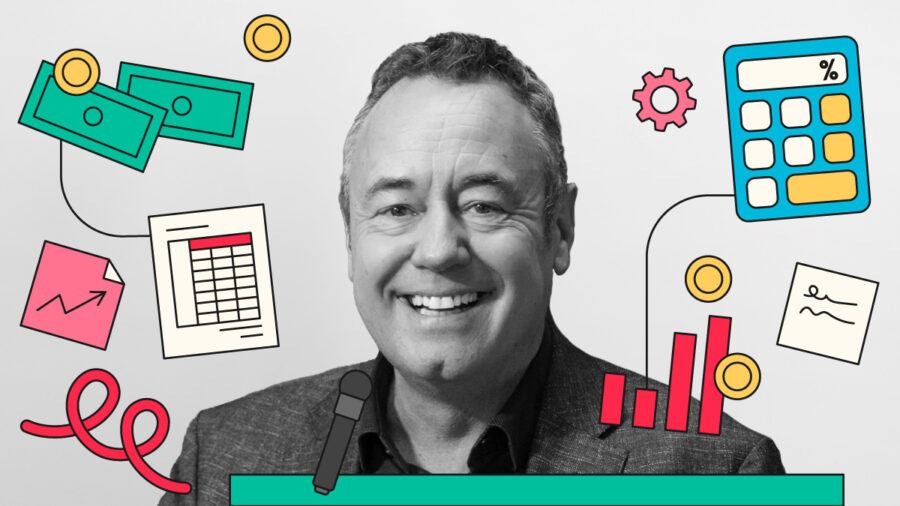
Paul Smolinski is Chief Financial Officer at Forterro, a London headquartered ERP software company serving Europe’s industrial midmarket. The business supports thousands of companies with software that helps manage operations, improve efficiency, and support growth.
Since joining in 2021, Smolinski has been part of a period of rapid expansion, with the company growing significantly through both organic growth and acquisitions across multiple European markets.
In this conversation, he reflects on his long career in finance, the evolving role of the CFO, and the importance of balancing strategy, people, and performance in a fast growing business.
How did you become a CFO?
I started my career with Ernst and Young in London and completed my chartered accountancy in 1986. Shortly after qualifying, I joined Compaq Computer in London and stayed there for 12 years.
During that time I had a range of roles. I worked in financial planning, then moved to Houston where I ran financial planning there, and later to Munich as European controller. I eventually returned to the UK as CFO.
Over that period, the company grew from around 100 million in UK revenue to 3 billion, so I saw a huge amount of change and development, which was a fantastic experience.
I have now been at Forterro since March 2021, and it has been the highlight of my career so far.
What skills or traits does a good finance leader need?
I think you need to be both strategic and commercial.
The CFO role has changed a lot over the last 30 years. It used to be more focused on reporting numbers, but now it is much more about driving the business forward and being involved in strategy.
For me, the most important trait is being a people person. You need a strong team, and you need to communicate with investors, banks, employees, and sometimes customers.
I often say there is a close relationship between the CEO, CFO, and chief people officer, and that partnership is very important for the growth of the company.
What excites you most about your current role?
I still get excited by the day to day aspects of the role.
I enjoy understanding where we are in the month or quarter, what deals we are closing, and how the business is performing.
I also work with finance teams across several European countries, and I enjoy speaking with them regularly and staying close to what is happening in the business.
We also do a lot of acquisitions, and looking at different companies across different countries is always interesting. I have the same enthusiasm for the role that I had when I first became a CFO.
What’s the biggest challenge facing your sector at the moment?
Everyone is talking about AI at the moment, and for me it is both a challenge and an opportunity.
We are looking at how we can use AI to create new revenue opportunities and also how it can help us become more efficient and optimize costs.
It is changing very quickly, so it is important to stay up to date and make sure we are not falling behind. We are already using AI in areas like reporting and customer support, and we are continuing to explore how it can support the business further.
What single thing do you think would make your job easier?
For me, it comes down to data.
It would be much easier if we had fully unified data across the business. As companies grow, systems and data can become fragmented.
Having everything connected and structured in a consistent way would make it much easier to use tools like AI and to get clear insights quickly.
What is the best bit of business advice you’ve ever received?
For me, it is about focusing on the basics.
Cash is always king. I have always made sure to plan finances carefully, maintain strong cash flow, and avoid borrowing more than can be repaid.
Another piece of advice I was given was to put worries into a box at the end of the day and go to sleep without thinking about them. It sounds simple, and good advice I try to follow.
Which book do you think every finance leader should read at least once?
A recent book I enjoyed is Supremacy by Parmy Olson, which looks at the history and development of AI. It helped me better understand how AI has evolved and where it is heading.
An older book that has had a lasting impact on me is The 7 Habits of Highly Effective People by Stephen Covey. One idea that has stayed with me is to begin with the end in mind, which I apply in both my work and personal life.
What do you do outside of work to protect yourself from burnout?
I try to plan my holidays and long weekends in advance so I always have something to look forward to.
I also spend time with my family and try to stay active, whether that is walking or just getting outside during the day.
I enjoy being social as well, even if it’s just going out after work for an hour. For me, it is about maintaining a balanced life.
What’s been your proudest achievement in your current role?
It has to be the growth of the company since I joined.
When I started in 2021, the business was around 150 million in revenue, and today it’s around 400 million. We have built a strong company with great people and a clear growth path.
It has been very rewarding to see the business grow and to be part of that journey.
If you weren’t a CFO, what would you like to do?
I enjoy mentoring people and helping them develop in their careers.
If I was not a CFO, I would probably spend more time doing that. I like working with younger people and helping them progress.
I would also like to spend more time playing golf and improving my game.
What is currently inspiring you today and why?
Recently I attended a kickoff meeting where a speaker named Bonita Norris spoke about climbing Mount Everest.
She became the youngest British woman to reach the summit, and her story was about perseverance, teamwork, and taking small steps to achieve something very big.
Her message about focusing on one step at a time really stayed with me, and I found it very inspiring.
Paul Smolinski is Chief Financial Officer at Forterro, a London headquartered ERP software company serving Europe’s industrial midmarket. The business supports thousands of companies with software that helps manage operations, improve efficiency, and support growth.
Since joining in 2021, Smolinski has been part of a period of rapid expansion, with the company growing significantly through both organic growth and acquisitions across multiple European markets.
In this conversation, he reflects on his long career in finance, the evolving role of the CFO, and the importance of balancing strategy, people, and performance in a fast growing business.