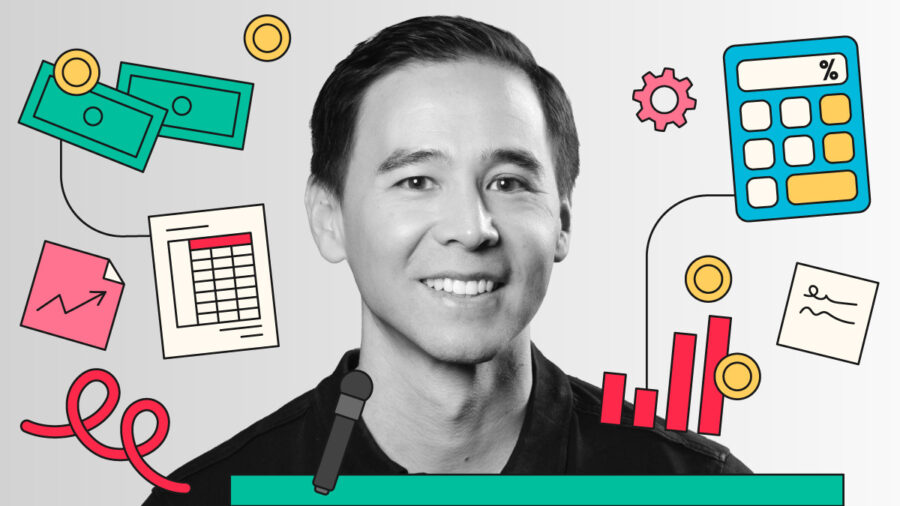
Mark Holt did not initially intend to become a CFO. However, an early interest in business, logic, and problem-solving eventually led him to finance and a career spanning commercial finance, treasury, investor relations, and business planning.
Before joining Trustonic, Holt held senior finance positions at Virgin Media O2 and Telefónica. His experience includes working for large multinational organizations as well as smaller, fast-growing technology businesses.
Today, Holt is CFO of Trustonic, a global cybersecurity company specializing in mobile device security. Its technology helps retailers, finance providers, and mobile carriers protect devices and support financing programs.
During our conversation, Holt discussed the differences between decision-making at large and small companies, why cybersecurity cannot be added after a product has been developed, and how Trustonic is working to make smartphones and digital services more accessible. He also shared the three pieces of advice he would give an aspiring CFO.
How did you become a CFO?
I did not originally plan to become a CFO. However, I have always been interested in business, how companies operate, and how they create value. Even when I was young, I was interested in buying and selling things and seeing how much profit could be made.
I studied business and economics before joining the O2 graduate program. I was naturally drawn to logic and problem-solving, and finance gave me an opportunity to learn while working with many different areas of the business.
After completing my management accounting studies, I decided to continue building a career in finance. I gained experience in accounting and commercial finance and began to recognize how much of an organization finance touches.
I also realized that the CFO sits at the intersection of strategy and performance. It is a position where you can have a significant influence on whether a company succeeds.
The traditional view of a CFO is someone focused on accounting, reporting, and measuring historical performance. Those responsibilities are still important, but today’s CFO must also participate in decision-making, help create value, establish the right strategy, and move the business forward.
What is the biggest difference between working for a large global company and a fast-growing technology business?
There are many parallels between large and small businesses. The challenges can be similar, and lessons from one environment can often be applied to the other. The biggest difference is generally how decisions are made.
At a large organization, the value at risk from a decision can be significant. Those companies therefore tend to have more structure around the decision-making process.
At O2, for example, decisions involved extensive consultation and consideration of different information and perspectives. When that process works well, it produces robust and carefully considered decisions.
However, a large organization can run the risk of involving so many people that it becomes difficult to make a decision. By the time a conclusion is reached, the opportunity may have passed.
Smaller companies tend to place more emphasis on speed. It is also easier to understand the wider context of the business, which allows leaders to operate with greater pace and accept some additional risk.
The effects of a decision also become apparent quickly. If it turns out to be the wrong decision, the company can respond and change direction. Neither approach is inherently good or bad. They reflect the company’s size, circumstances, and stage of development.
What excites you most about your role at Trustonic?
Trustonic is focused on scaling, which introduces new challenges as the business becomes more complex.
What originally attracted me to the company was its purpose. Trustonic aims to help bridge the digital divide by making smartphones and digital services accessible to more people.
We help customers provide financing solutions in markets where they might not otherwise be able to offer them. By making those programs more secure and reducing the associated risk, more consumers can gain access to smartphones and the digital services they provide.
Having a clear purpose behind what we do remains exciting to me. I also enjoy the variety that comes with working in a scaling business.
We might discuss one challenge today and face something entirely different tomorrow. Many decisions are being made for the first time, so there is no established path we can simply follow. We learn by doing, make decisions relatively quickly, and adjust based on what we learn.
What do business leaders still misunderstand about cybersecurity?
One common misunderstanding is that cybersecurity can be treated as an afterthought or fixed later.
A successful business must provide secure and reliable products or services. Cybersecurity therefore needs to be built into the design process from the beginning. Waiting until a product has already been developed may be too late.
Another misconception is that companies can completely eliminate cyber risk. Businesses now operate through long supply chains and interconnected systems involving numerous suppliers and customers. That has created a much larger attack surface.
Eliminating every potential risk would require a company to eliminate risk across its suppliers and protect every internal and customer system. That is not realistic. Attempting to do so would also be extremely expensive and might still fail.
The priority should be understanding the risks, deciding how to reduce them, and developing plans to recover when something goes wrong. Cybersecurity is not about assuming risk will disappear. It is about knowing where the risks are and preparing the organization to respond.
Where do you see the biggest opportunities in digital identity and mobile security?
In developed markets, the smartphone has become something like the remote control for a person’s life.
People store passwords, banking applications, contact information, and many other important resources on their devices. Losing a smartphone can therefore have an enormous effect on someone.
We see an opportunity to protect those devices, whether they are in the hands of consumers or moving through the supply chain. That could involve helping a large company secure its supply chain or providing consumers with stronger protection.
The other major opportunity is expanding access. Many people still do not have access to smartphones or the digital services that many of us take for granted.
Trustonic is focused on helping more people obtain that access by enabling secure device financing. The opportunity is significant for the individuals who gain access, the markets where they live, and the wider global economy.
Which part of your finance background has helped you most as a CFO?
Each part of my background has helped in a different way.
Working in treasury reinforced the importance of cash. What remains in the bank determines what a company can use to keep operating the following day. Strong cash management is particularly important in a smaller business.
Treasury also taught me about liquidity, resilience, forecasting, and risk management. Accounting showed me the importance of reliable information and strong controls. Without them, the information used to make decisions could be incorrect.
Investor relations gave me a different perspective. Much of finance focuses on internal information and how it supports decisions and forecasts. Investor relations requires you to consider how outsiders view the company, how you explain its strategy and performance, and how that story can affect its valuation.
However, commercial finance probably had the greatest influence on how I developed as a CFO. It is where financial data becomes part of the real business.
It taught me about commercial negotiations, strategy, winning customers, and using information to help a company grow. Working with sales and commercial teams also showed me that customers do not always behave logically. That experience shaped how I support management and approach finance as a business partner.
What is the biggest challenge facing your industry?
I see two significant challenges, both influenced by AI.
The first is the effect AI demand is having on memory costs. Higher component costs are increasing the prices of some lower-end smartphones, which makes those devices even less affordable for people who already struggle to access them.
We are seeing price increases of approximately 20% to 30% on some lower-end handsets. Trustonic is working with manufacturers to create financing programs that make those devices more affordable while reducing the risk for the companies providing the financing.
The second challenge is the increase in AI-driven cyber threats. AI can be extremely powerful in the right hands, but it is also powerful in the wrong hands.
This makes it even more important to build cybersecurity into products and services from the beginning. Threats will continue evolving, so our responsibility is to develop secure products and help customers manage those risks.
What advice would you give an aspiring CFO?
I would focus on three things: continue learning, remember the wider mission, and find the right support.
Learning should continue throughout your career. The foundation I developed during my first years in finance remains important today, but development cannot stop there. I recently returned to school for an executive MBA because surrounding yourself with people and ideas in a learning environment can be incredibly valuable.
The second lesson is to keep the organization’s mission in mind. One of my former managers used to ask, “Does it make the boat go faster?”
When considering a decision or investment, ask whether it supports what the business is trying to achieve. Finance teams deal with large amounts of data and work through recurring monthly processes, so it can be easy to lose sight of the wider purpose.
The third lesson is to find the right people to support your development. At times, choosing the right leader to follow can be more important than choosing the right role.
A strong leader will create learning opportunities, challenge you, and provide support. I remain in contact with people I worked with 10 or 15 years ago, and I still discuss challenges with them. I would not be where I am today without the people who supported me along the way.
What do you do outside of work to switch off and recharge?
I have two young children, so whether I am looking for a distraction or not, they are very good at taking my attention away from work.
Spending time with them is grounding. It allows me to focus on what is directly in front of me and reminds me why I do what I do.
I also enjoy traveling with my family and exploring new places. I have family in different parts of the world, including the United States and Asia, so traveling gives me an opportunity to visit them while stepping away from work.
On a more regular basis, I find exercise helpful, particularly running. I usually don’t listen to music. I prefer to spend that time thinking, processing what is happening, and giving myself the space to relax and recharge.
Mark Holt did not initially intend to become a CFO. However, an early interest in business, logic, and problem-solving eventually led him to finance and a career spanning commercial finance, treasury, investor relations, and business planning.
Before joining Trustonic, Holt held senior finance positions at Virgin Media O2 and Telefónica. His experience includes working for large multinational organizations as well as smaller, fast-growing technology businesses.
Today, Holt is CFO of Trustonic, a global cybersecurity company specializing in mobile device security. Its technology helps retailers, finance providers, and mobile carriers protect devices and support financing programs.
During our conversation, Holt discussed the differences between decision-making at large and small companies, why cybersecurity cannot be added after a product has been developed, and how Trustonic is working to make smartphones and digital services more accessible. He also shared the three pieces of advice he would give an aspiring CFO.