Jim Donnet is Chief Financial Officer at Creditspring, a UK lender providing unsecured credit. Instead of charging interest that builds over time, the company applies a flat cost to its loans, an approach it says helps customers avoid falling into long term debt. Creditspring positions itself as a more responsible alternative to traditional consumer lending models.
Jim joined Creditspring in 2020, when the business had around 8,000 members and a £1.5 million loan book. Since then, he has helped guide the company through significant growth, including reaching profitability and serving more than 300,000 customers.
With more than 15 years of experience across financial services, investment banking, M&A, and early stage businesses, he describes himself as an execution partner who asks the “what if” questions, helping turn growth plans into something deliverable.
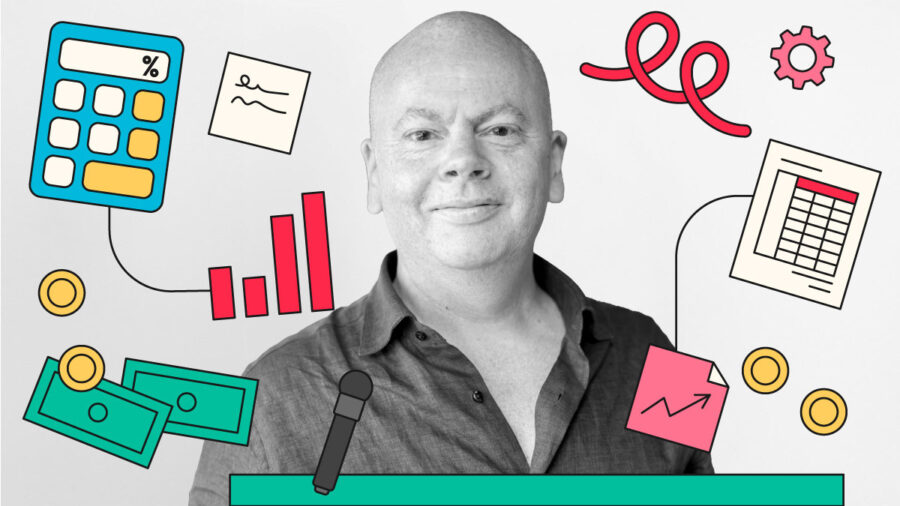
How did you become a CFO?
Compared to a traditional CFO, it was a nonlinear journey. It was more of a meandering path. People try to create a compelling narrative around their career history, but real life does not really work like that.
I came out of university intending to become a chartered accountant, which I did. After a few years, I decided to move into investment banking. I joined Samuel Montagu, which was part of HSBC, and worked in financial services M&A and equity capital markets, mainly in Eastern Europe and emerging markets.
In my late thirties, I moved into a corporate role in Ukraine, helping an entrepreneur acquire and build financial services assets. After returning to the UK, I became the founding CFO of an insurance technology startup. That was my first real CFO role and involved significant fundraising and investor liaison.
I later met the founder of Creditspring. Initially, I was sceptical about consumer finance, but the mission to build a more responsible model convinced me. I joined in November 2019 and have been here ever since.
It was more by default than design, but I would not have been able to do this role without all the experiences along the way.
What skills or traits does a good finance leader need?
A good CFO needs to be adaptable. In an early stage or growing company, nothing ever goes exactly according to plan. You can set a budget and have a view on trajectory, but you know the details will change.
You need to be able to think on your feet. I sometimes say you need the reactions of a Formula One driver or a professional boxer.
It is not about being the strongest. It is about being responsive and adaptable. If you’re not flexible, you will lose your sanity. Particularly in growth businesses, the ability to pivot and adjust is critical.
What excites you most about your current role?
Everything is in flux at the moment, which makes it exciting.
The funding markets are changing. Private credit has been through a significant shift recently. The regulatory environment is constantly evolving. At the same time, we feel that because of the way we built our product, we are in a strong position.
We have grown to more than 300,000 customers and reached profitability. Given the volatility in funding and regulation, that suggests we are doing something right.
What’s the biggest challenge facing your sector at the moment?
The biggest challenge is balancing growth with responsibility.
There is always pressure to grow faster. Founders want acceleration. Investors want a compelling growth story. But as a CFO, you have to ensure that growth is sustainable and funded appropriately.
In consumer lending, the easiest way to grow is to relax your acceptance criteria. We do not want to do that. The tension is between delivering growth that is attractive to investors, responsible for debt providers, and reassuring for regulators. Responsible growth is the central challenge.
What single thing do you think would make your job easier?
A more stable regulatory environment would help.
The regulator is rightly concerned about protecting customers, especially those on tighter budgets. At the same time, the private sector is expected to provide credit to those customers.
There can be tension in that dynamic. A clearer and more consistent framework would make planning and execution easier.
What is the best bit of business advice you’ve ever received?
An entrepreneur I worked with in Ukraine, Alexander Adarich, once told me to take harvest when you can and to keep your eye on the longer term success, but to smell the flowers along the way.
He was someone who took bold risks and built ambitious ventures. From him, I learned the importance of knowing what you bring to the table.
I see myself as an execution partner. Founders are often natural risk takers. My role is to ask the what if questions and help turn ambition into something deliverable.
Which book do you think every finance leader should read at least once?
For understanding finance more broadly, I would recommend Hedgehogging by Barton Biggs. It explains investment concepts in a digestible way and offers insight into how major investors think and make decisions.
For growth companies, Bad Blood by John Carreyrou is a powerful read. It tells the story of Theranos and shows the importance of asking questions when things do not make sense. If you’re not getting the right answers, you need to keep probing.
What do you do outside of work to protect yourself from burnout?
In a startup environment, strict work life balance is difficult. I make time for open water swimming, walking the dog, and being with my family. Staying active and spending time with family helps keep things in perspective.
What’s been your proudest achievement in your current role?
Helping the company reach profitability. It’s not flashy, but it is necessary. Particularly in our sector and with our demographic of employees, profitability is fundamental. It is how we continue to exist and stand on our own two feet.
On a personal level, I am proud of the team around me. I handle much of the external investor liaison, but our finance director has built the internal finance infrastructure that we depend on. You’re only as good as your team
If you weren’t a CFO, what would you like to do?
In an idealised world, I would either be a perfume developer at Jo Malone or a consultant to John Smedley knitwear.
I once considered journalism, but I am not naturally concise. I have had to work on that.
What is currently inspiring you today and why?
I recently read Patriot by Alexei Navalny. It is a powerful and, in some ways, difficult book. Navalny returned to Russia knowing he would be imprisoned. He said he did so because he loved his country and wanted it to be free.
It was inspiring to read about that kind of conviction and genuine sense of purpose.
Jim Donnet is Chief Financial Officer at Creditspring, a UK lender providing unsecured credit. Instead of charging interest that builds over time, the company applies a flat cost to its loans, an approach it says helps customers avoid falling into long term debt. Creditspring positions itself as a more responsible alternative to traditional consumer lending models.
Jim joined Creditspring in 2020, when the business had around 8,000 members and a £1.5 million loan book. Since then, he has helped guide the company through significant growth, including reaching profitability and serving more than 300,000 customers.
With more than 15 years of experience across financial services, investment banking, M&A, and early stage businesses, he describes himself as an execution partner who asks the “what if” questions, helping turn growth plans into something deliverable.