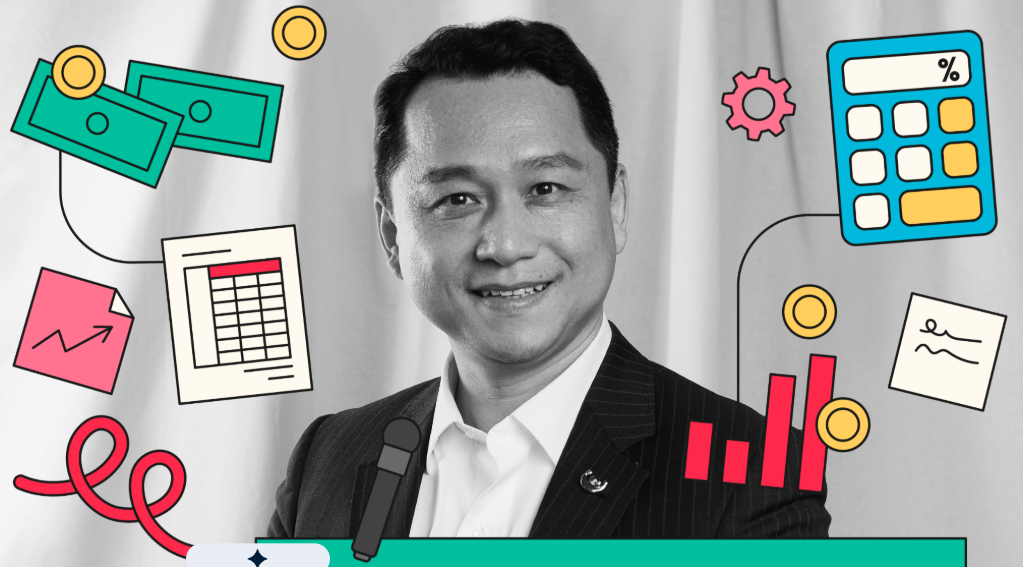
Jason Wang has built his finance career across government, investment banking, and multinational consumer goods companies, giving him a broad perspective on what it takes to lead finance for a global organization. Today, as CFO and COO of H&H Group, he helps oversee a business that delivers premium nutrition and wellness products across more than 20 countries.
During our conversation, Jason shared how that diverse background shaped his leadership approach, the lessons he’s learned from acquisitions, and why preserving a company’s culture can be just as important as integrating its operations. He also discussed H&H’s approach to sustainable growth and the importance of keeping consumers’ trust while expanding around the world.
Can you tell us about your journey to becoming a CFO?
Before becoming a CFO, I built my career in three different areas.
I started in government, working for China’s Ministry of Commerce on international business. After earning my MBA in the United States, I worked in New York and Hong Kong as an investment banker with J.P. Morgan. I then moved into corporate finance, taking on financial control, treasury, and other finance leadership roles with multinational consumer goods companies.
Having experience across government, investment banking, and corporate finance gave me a strong foundation and a broad set of skills that prepared me for the responsibilities of a CFO.
Can you tell us a little about H&H Group?
H&H Group focuses on premium nutrition and wellness products. We’re headquartered in Hong Kong, with a second corporate hub in London, and today we operate in more than 20 countries across China, North America, Australia, Southeast Asia, and Europe.
We have three main business segments: adult nutrition and care, baby nutrition and care, and pet nutrition and care. Together, those businesses allow us to serve the nutrition and wellness needs of the whole family.
You have a great deal of experience with acquisitions. What mistakes do companies often make after an acquisition is complete?
For companies looking to grow faster than the market, acquisitions can be an important part of their strategy. However, many acquisitions don’t deliver the expected returns for two main reasons.
The first is a lack of a clear strategic direction from the beginning. Companies need to understand how an acquisition supports their overall business objectives before moving forward.
The second is integration. After an acquisition, some organizations don’t have a comprehensive plan to fully integrate the new business. Without that, they miss opportunities to create synergies across both back-office and front-office operations.
After an acquisition, are there things that should remain untouched? How do you decide what to preserve and what to change?
One of the most important things to preserve after an acquisition is the culture and values of the acquired business. Those qualities should be respected and then integrated into the broader culture of the organization.
For example, after we acquired Swisse, we maintained its focus on natural health by combining nature and science in the brand positioning. We also preserved its “Celebrate Life Every Day” philosophy, which encourages a positive mindset for both employees and consumers. Those values have remained an important part of the brand and have also become part of H&H’s broader culture.
At the same time, some areas should be integrated to create greater value. Activities such as research and development and parts of the supply chain can be brought together to share resources, improve purchasing power, and create efficiencies across the group.
H&H’s brands have earned a great deal of trust from consumers. How do you protect that trust while scaling the business globally?
Maintaining consumers’ trust is essential to our business.
We do that by following the highest quality control and management standards in the industry. We have zero tolerance for product defects before products leave our warehouses, and we have extensive testing requirements to identify potential issues before consumers ever receive a product.
We also invest heavily in research and development around the world to ensure our products are both high quality and scientifically proven. From product development and manufacturing through supply chain, testing, and quality control, every step is designed to deliver products that consumers can trust.
Looking back at the Swisse acquisition, what do you think H&H did right during the integration process?
The integration wasn’t easy, but it has been a successful journey.
When we acquired Swisse 10 years ago, the business generated about $200 million in annual revenue and operated primarily in Australia. In 2025, revenue reached approximately $1 billion, and Swisse had expanded into more than 20 markets. Today, it is the number one health supplement brand in both Australia and China.
Three factors helped drive that success. First, we maintained a consistent brand position as a leading Australian natural health brand. Second, we continuously expanded our product portfolio to meet changing consumer needs, adding products for heart health, bone health, brain development, healthy aging, and children’s development. Third, we built a strong omnichannel presence so consumers could find our products whether they shop online, through social commerce, or in traditional retail stores.
H&H recently launched the Singapore Procurement Tower. What made that project especially important to you?
As both CFO and COO, this project required my close involvement.
We had already established procurement towers in Hong Kong and London. Singapore was the next logical step because of our rapid growth across Southeast Asia, India, the Middle East, and Australia. Having a procurement hub located in the center of that region allows us to better support those businesses.
Singapore is also home to many global suppliers, research facilities, and industry talent. Establishing a procurement tower there allows us to work more closely with suppliers and their R&D teams to develop new products while supporting future growth.
Beyond financial performance, what connects H&H’s businesses?
At H&H, we measure success using a framework we call PPAE.
The first “P” stands for Premium. We focus on premium products made with high-quality ingredients and formulations. That allows us to generate the resources needed to continue investing in our brands, innovation, and future growth.
The second “P” stands for Proven. Our products must deliver proven functional benefits supported by clinical studies and real-world evidence. Consumers need to experience those benefits if they are going to continue purchasing our products.
The “A” stands for Aspirational. Our brands promote a healthy lifestyle, and everything from our health advice to our brand ambassadors reflects that philosophy.
The “E” stands for Engaging. We stay connected with consumers both online and offline to build stronger relationships, encourage repeat purchases, and create positive word-of-mouth.
For us, success is about much more than financial performance. We evaluate whether a business reflects those four principles.
As you look toward future growth, what opportunities are you focused on?
At the moment, our priority isn’t new acquisitions. We’ve already built a comprehensive portfolio, so our focus is on maximizing the synergies across our existing businesses.
We’re also expanding into new markets where demographic trends support growing demand for health and wellness products and where consumers shop through a combination of online and offline channels.
For example, we’re continuing to grow rapidly in Thailand, where demand for beauty supplements aligns well with our product portfolio. In Europe, we’re also expanding our pet supplement business by growing both our online presence and our retail partnerships.
What helps you prevent burnout?
I follow a framework we call NMM: Nutrition, Movement, and Mindfulness.
Nutrition means maintaining a healthy diet and taking the supplements that help me stay healthy and energized.
Movement means making time for exercise every day. During the week, I schedule time to stay active, and on weekends I enjoy jogging, swimming, and playing golf.
Mindfulness is equally important. I spend 10 to 15 minutes each day practicing meditation, which helps me stay calm and focused no matter what challenges I face.
What advice would you give someone who wants to become a CFO?
First, build a strong technical foundation. Professional qualifications gave me the financial knowledge and technical skills needed to perform the role.
Second, develop a strategic business mindset. A CFO should be more than a finance professional. You should become a value-added business partner. Taking on business leadership roles outside of finance helped me better understand operations and strategy and allows me to approach challenges from multiple perspectives.
Finally, seek international experience whenever possible. For anyone leading a global business, exposure to different markets and cultures is becoming increasingly important.
Jason Wang has built his finance career across government, investment banking, and multinational consumer goods companies, giving him a broad perspective on what it takes to lead finance for a global organization. Today, as CFO and COO of H&H Group, he helps oversee a business that delivers premium nutrition and wellness products across more than 20 countries.
During our conversation, Jason shared how that diverse background shaped his leadership approach, the lessons he's learned from acquisitions, and why preserving a company's culture can be just as important as integrating its operations. He also discussed H&H's approach to sustainable growth and the importance of keeping consumers' trust while expanding around the world.