Hemant Kapadia shares how an engineering background shaped his finance leadership style and why transparency and financial literacy matter inside a company.
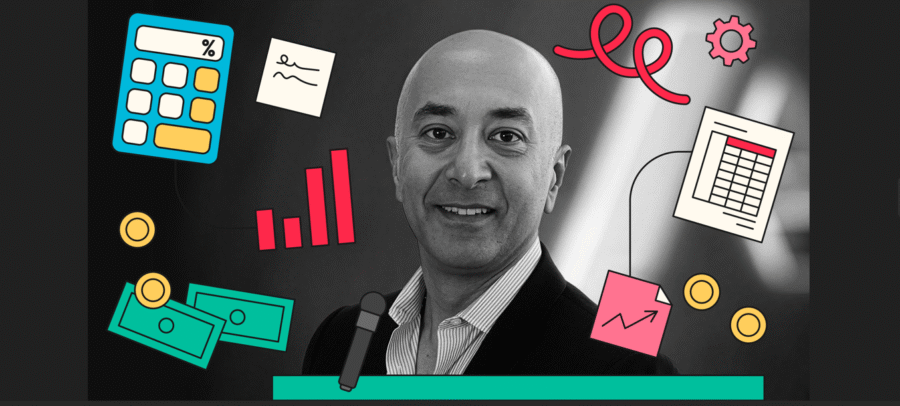
Hemant Kapadia is Chief Financial Officer of AI scenario planning firm Anaplan. The company provides a platform that helps enterprises make faster and more informed business decisions across finance, supply chain, sales, and workforce planning.
Since joining Anaplan in 2022, Kapadia has overseen significant growth while the company has expanded its investment in product development and artificial intelligence capabilities.
Before moving into finance leadership, Kapadia began his career as an engineer working on microelectronics for the F-35 Joint Strike Fighter before transitioning into finance roles at GE and other technology companies.
How did you become a CFO?
I did not take the traditional path into finance like my brother did, who started in accounting. I began working on microelectronics for the F-35 Joint Strike Fighter before moving to GE’s audit staff.
From there I joined GE’s manufacturing businesses in finance. Those were low margin businesses, which helped me build my skill set and really get into the details of how operating metrics connect to financial performance.
After that I spent time in the semiconductor industry and in technology companies more broadly, and now I am in SaaS. My engineering background, which is grounded in math, analytics, process orientation, and problem solving, has helped me connect the dots across businesses and understand the impact on financials.
What skills or traits does a good finance leader need?
There is a balance between several things. You need attention to detail, the ability to coach and mentor others, curiosity and a passion for learning, and the ability to be a strong partner to the CEO.
Attention to detail means knowing the facts and understanding how changes in one area of the business affect other areas.
Partnership is also critical. A CFO should be in lockstep with the CEO, acting as a sounding board and helping identify potential blind spots
What excites you most about your current role?
We have made a lot of progress at Anaplan over the last few years.
When the company was taken private it was around $600 million in annual recurring revenue and was unprofitable. Since then we have nearly doubled revenue and significantly improved profitability.
At the same time we have invested heavily in innovation, including a major commitment to research and development. Much of that investment is focused on new product capabilities and AI based solutions. With those innovations and new solutions for customers, it is a very exciting time to be at Anaplan
What’s the biggest challenge facing your sector at the moment?
A challenge across the industry is the perception that AI will eventually do everything for everyone.
Companies should absolutely use AI, and we are doing the same. Many of our product investments are focused on expanding AI capabilities.
However, in enterprise environments companies need answers that are grounded in their data and that they can act on with confidence. That is different from the probabilistic responses you might get from a large language model.
Businesses still need systems that connect their data and support real operational decisions. That is where we believe we can deliver real value to customers.
What single thing do you think would make your job easier?
A clone would probably help.
More seriously, the technology we use at Anaplan already makes my job much easier. Because the system connects our sales pipeline, forecasting, workforce planning, and expenses, I can see the impact of business changes almost in real time.
If a deal closes or a forecast changes, I can immediately see the impact on revenue, profitability, and cash flow through dashboards. That gives me a near real time view of the business and allows me to run the company with a lot more confidence.
What is the best bit of business advice you’ve ever received?
The best advice I received was not to be afraid of being outside your comfort zone.
It may feel uncomfortable at first, but that is how you build the muscle of learning and adapting to new businesses, industries, and challenges.
I have worked across several industries in both engineering and finance. Each time you move into something new you learn a different market and business model, and that keeps things interesting.
Which book do you think every finance leader should read at least once?
There is a book I keep in my office called Only the Paranoid Survive by Andy Grove.
Just seeing the title is a good reminder. It reflects the idea that leaders should always be thinking about what might be coming around the corner and how their business needs to adapt.
That mindset is especially important today.
What do you do outside of work to protect yourself from burnout?
I try to exercise when I can. When I’m in New York I enjoy walking in Central Park, and when I am in Miami I like walking along the bay.
Travel is also something I enjoy. Experiencing different cultures and food is something that helps me recharge.
What’s been your proudest achievement in your current role?
Across the businesses I have worked in, I try to leave them in a better position than when I joined.
That applies not only to the business itself but also to the finance teams, IT teams, and other areas I have been responsible for.
At Anaplan I have also focused on transparency with financial updates and helping employees better understand the business through the finance workshops I run. That approach has resonated well with employees.
If you weren’t a CFO, what would you like to do?
I would probably try to be a professional golfer.
I have not broken par yet, but being outside and playing golf would not be a bad career.
What is currently inspiring you today and why?
I listen to the All-In podcast every week.
They cover a range of topics including technology, politics, and industry trends. It’s relevant to the industry I work in and often gives me ideas or perspectives to think about.
It’s a good way to stay informed and pick up new insights.
Hemant Kapadia shares how an engineering background shaped his finance leadership style and why transparency and financial literacy matter inside a company.
Hemant Kapadia is Chief Financial Officer of AI scenario planning firm Anaplan. The company provides a platform that helps enterprises make faster and more informed business decisions across finance, supply chain, sales, and workforce planning.
Since joining Anaplan in 2022, Kapadia has overseen significant growth while the company has expanded its investment in product development and artificial intelligence capabilities.
Before moving into finance leadership, Kapadia began his career as an engineer working on microelectronics for the F-35 Joint Strike Fighter before transitioning into finance roles at GE and other technology companies.