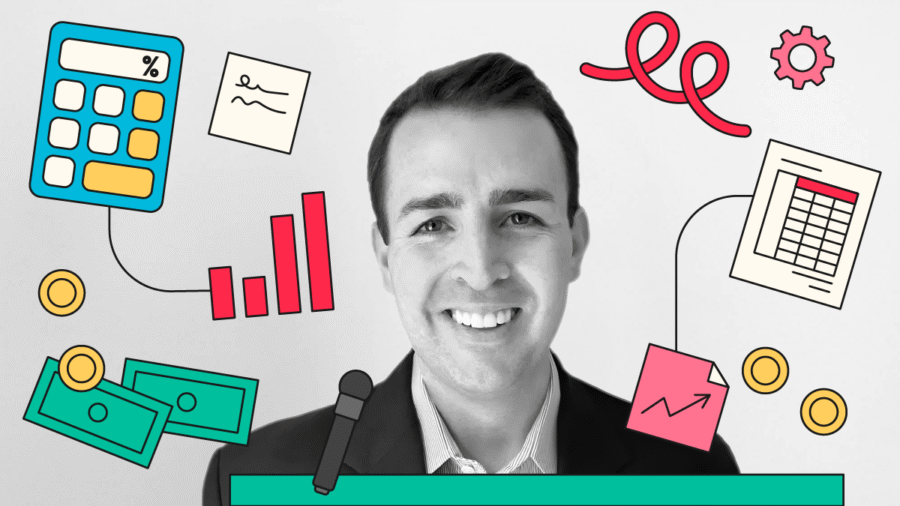
George Todd is Chief Financial Officer at Nozomi Networks, a cybersecurity company focused on protecting critical infrastructure. The company serves customers across dozens of industries and operates globally, supporting organizations in areas where disruption can have real-world consequences.
Todd has built his career in finance leadership roles across both large organizations and high-growth companies. He has worked across industries, including insurance, software, and cybersecurity, with a focus on building strong teams and solving complex problems.
In this conversation, he shares how his career evolved. He also discusses what defines strong leadership and how he approaches growth and change.
How did you become a CFO?
On paper, I took a fairly traditional route. I started my career at a Big Four firm, then moved into industry where I held roles as a controller and then a chief accounting officer before becoming CFO.
I did not have a perfectly defined path, but I always knew that I wanted to be a CFO. I focused on working with people I could learn from and in environments where I could make an impact.
I spent 12 years at PwC, where I had the opportunity to work closely with senior leadership teams and gain exposure to boardrooms and complex business challenges. That experience shaped my early career.
From there, I moved into industry because I wanted to be more directly involved in driving change. I took on roles where I could build teams, improve processes, and take on new responsibilities.
Eventually, I joined Nozomi, and after about six months, I stepped into the CFO role.
What skills or traits does a good finance leader need?
I think all leaders need to be humble, be clear communicators, and be good judges of people.
Hiring is one of the most important things a leader does. Building a strong team is hard, but it is what sets companies apart.
As a finance leader, you need to master a lot of areas, but one thing stands out. Before you can be a great finance leader, you need to be a good finance doer. You need to have complete command of the numbers and understand them deeply.
You also need to be a strong storyteller and spokesperson for the company. That starts with knowing what you are talking about and being able to instill confidence.
Finally, you have to wear a lot of hats. Finance leaders are often responsible for areas like legal, compliance, and supply chain. You need to recognize that you are not the expert in everything and hire the right people to support you.
What excites you most about your current role?
For me, this role has been very transformational.
I have seen the company evolve, the industry evolve, and I have grown personally as well. Over the past few years, we have focused heavily on improving efficiency and reaching cash flow break-even.
That required a shift in mindset. In our industry, there was an assumption that inefficiency was unavoidable. We challenged that and focused on operating more efficiently.
Now, the next phase is very exciting. We have announced that Nozomi is being acquired by Mitsubishi Electric.
We will continue operating as Nozomi, but with the support of a much larger organization. There is a big opportunity to continue growing our business and also help transform how Mitsubishi operates.
What’s the biggest challenge facing your sector at the moment?
There is an increasingly complex threat landscape with more frequent and sophisticated cyber events.
There is also a growing regulatory environment that is difficult to keep up with.
More broadly, the industry is moving from an early-stage market to a more mature, mainstream one. We’re expanding beyond early adopters to reach a wider range of customers.
That requires us to evolve how we go to market and how we position ourselves.
What single thing do you think would make your job easier?
More time in the day would help, but that’s not realistic.
What I am focused on is mastering AI. While it has been part of our product for a long time, there are still many opportunities to use it in my role.
I do not think AI will replace people, but I do think people who use AI effectively will have a significant advantage.
What is the best bit of business advice you’ve ever received?
One piece of advice I received was to think of myself as a surgeon.
The idea is that people want confidence and clarity. If you were trying to decide between two surgeons, one who seemed unsure and another who clearly understood the situation and explained it well, you would trust the one who made you feel confident. That principle has stayed with me, especially when presenting to boards or leading teams.
Another piece of advice was to hire people you want to spend time with. Character matters, and you spend a lot of time with your team.
I look for people who are self-aware, honest about their weaknesses, and open to improving.
Which book do you think every finance leader should read at least once?
I would recommend The Outsiders by William Thorndike. It focuses on a group of CEOs who took unconventional approaches to running their companies and capital allocation.
The main takeaway for me is that conventional wisdom is not always correct. In many cases, it can be completely wrong.
That idea influenced how we approached building efficiency in our business. Instead of accepting industry norms, we chose a different path.
What do you do outside of work to protect yourself from burnout?
Right now, I have a seven-week-old baby at home, so balance is a bit difficult.
Before that, I would say travel is the main thing for me. I enjoy experiencing different cultures and visiting new places.
My wife and I have a goal of visiting at least as many countries as we are years old, so that keeps things interesting.
What’s been your proudest achievement in your current role?
This has been the best role I ‘ve had, and I am proud of what we have accomplished as a company.
The work that went into preparing for the transaction with Mitsubishi Electric stands out.
I am especially proud of the team. Watching them work through the process and perform at a high level was very rewarding.
If you weren’t a CFO, what would you like to do?
Earlier in my life, I would have said professional golfer, but that requires a level of talent and time that I do not have.
If I were to do something different now, I would focus on developing people and mentoring the next generation of finance leaders.
What is currently inspiring you today and why?
The people at Nozomi are inspiring me right now.
During a time of significant change, I have seen a very positive response from the team. Instead of being hesitant, people have embraced the challenge.
There’s a strong belief that we belong in this next phase and that we can make a meaningful impact.
George Todd is Chief Financial Officer at Nozomi Networks, a cybersecurity company focused on protecting critical infrastructure. The company serves customers across dozens of industries and operates globally, supporting organizations in areas where disruption can have real-world consequences.
Todd has built his career in finance leadership roles across both large organizations and high-growth companies. He has worked across industries, including insurance, software, and cybersecurity, with a focus on building strong teams and solving complex problems.
In this conversation, he shares how his career evolved. He also discusses what defines strong leadership and how he approaches growth and change.