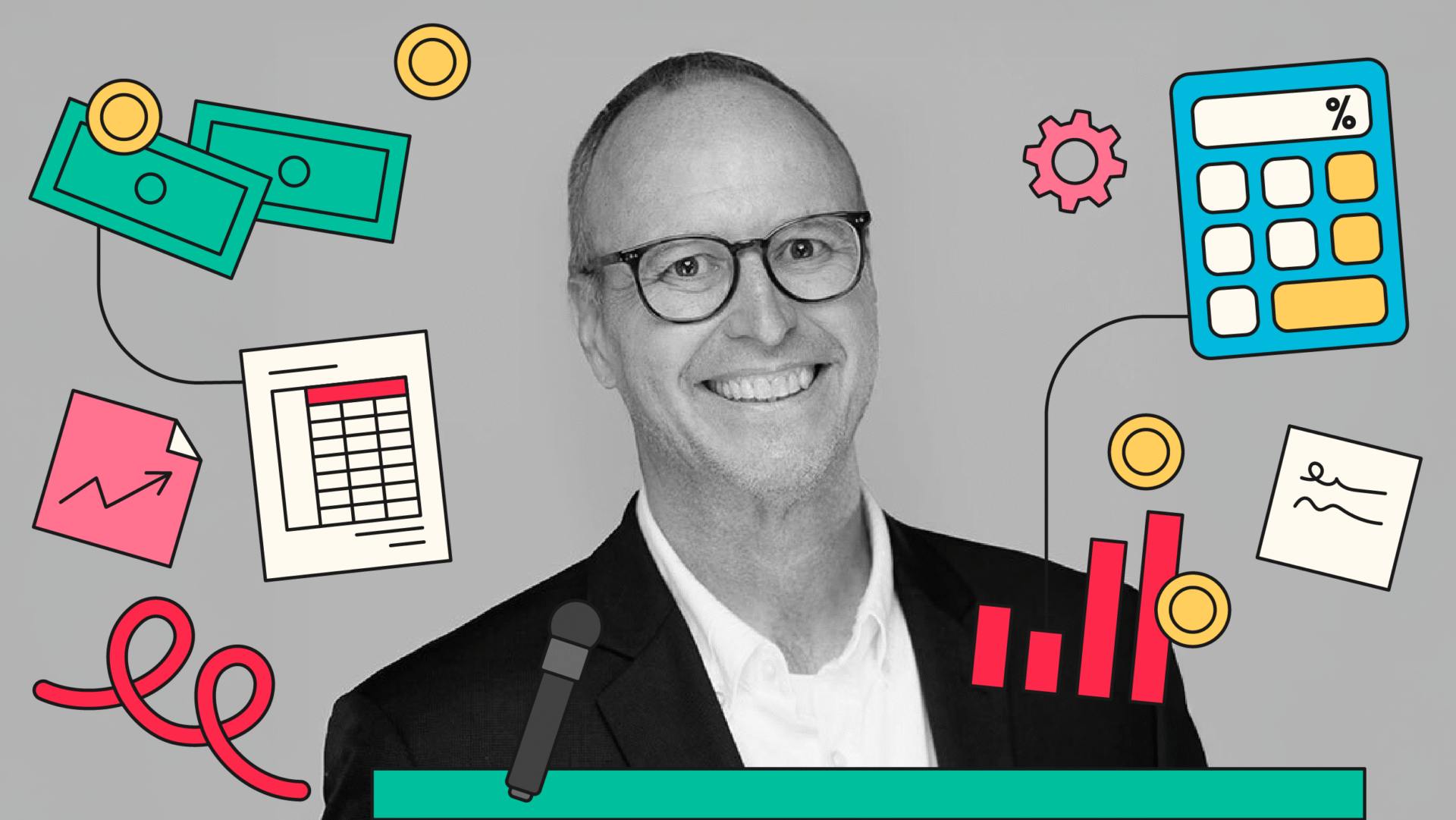
Chris Kehoe brings experience in financial systems, operational accounting, budgeting, business modeling, and process improvement to his role as chief financial officer of Theorem.
Before joining Theorem, Kehoe held executive roles at Intent Media and Equinox. He was also a founding partner of Praxisphere, a consulting and advisory firm providing transactional support services.
Theorem creates and manages digital marketing campaigns for brands around the world. The US-based company has a global footprint, with operations supporting clients across North America, Europe, and the Asia-Pacific region.
During our conversation, Kehoe discussed how experience shaped his career, why predictive analytics represents an important opportunity for finance teams, and how Theorem is balancing its current services with greater automation. He also shared how his team responded to the pandemic and why he is relearning golf after nearly three decades away from the sport.
How did you become a CFO?
I studied accounting and finance before beginning my career at Bristol-Myers Squibb. At the time, employees shared computers. Because I was younger and comfortable using them, much of the spreadsheet work came my way.
That turned out to be a major benefit. Building those spreadsheets helped me understand how information moved through a company and how different parts of the business worked together.
Since then, I have worked for large, midsize, small, and venture-backed startup companies. I have gained experience at both the corporate and operational levels, which has given me visibility into many parts of an organization.
The combination of those experiences helped me work my way up. I became a director before I was 30, a vice president before I was 40, and a CFO before I was 50.
What skills or traits define a great finance leader today?
For me, it comes down to experience.
I have worked across nearly every function within a corporate finance structure. I have handled accounts payable, implemented financial systems, served as a director of financial systems, and completed extensive budgeting and analysis work.
That breadth of experience gives me confidence when financial issues arise. This is particularly important in smaller companies, where there may not be many people available to serve as sounding boards. You need to draw on your own experience to make decisions and move forward.
What attracted you to a company working across digital marketing, media operations, automation, and business transformation?
I was attracted to the opportunity to play a more strategic role.
In a smaller company, you need to wear many hats. I could see that my responsibilities would extend beyond finance and allow me to contribute as part of the wider leadership team.
That included helping stabilize performance, improve profitability, build a stronger foundation for growth, and work with cutting-edge technology. Those were the main reasons I joined Theorem.
How does constant change across digital marketing shape your priorities as CFO?
My primary responsibility as CFO is protecting the business. That requires anticipating change, allocating resources carefully, and supporting our clients.
We do that through strong forecasting, efficient operations, and the financial flexibility to invest in the right opportunities.
Theorem also offers Upward, an automation offering for clients. Its ability to scale is significant, and automation has helped create strong margins. Supporting that opportunity while protecting the wider business is an important part of my priorities.
Which part of your finance background has had the greatest effect on how you lead?
Financial systems, operational accounting, budgeting, business modeling, and process improvement are all closely connected. The common thread is experience.
I have spent approximately eight or nine years in this industry, including several years with another startup. I have also worked with many different leaders throughout my career.
I would like to think I learned from the good qualities of the people I reported to and left the bad ones behind. At this stage of my career, the way I treat people has the greatest effect on how I lead.
That relationship works both ways. I have an excellent finance team, and I would not be successful without them. We are a small group, so the quality of every person matters.
How do you balance growth, profitability, and operational efficiency in a services-led business?
We monitor profitability, growth, and operational efficiency against healthy benchmarks. However, although Theorem is a technology company, it is predominantly a labor-intensive services business.
Balancing workforce capacity and utilization is therefore central to the company’s financial stability. We need the right talent in the right places at the right time.
AI is helping us work more intelligently and scale, but it is also changing where companies invest. The goal is not simply to invest in growth. It is to pursue the type of growth that will create long-term enterprise value.
Where are the biggest opportunities for automation in modern finance teams?
I believe AI and predictive analytics will create benefits that businesses could not have imagined in the past.
Enterprise resource planning systems have long automated activities such as matching vendor records with invoices. Predictive analytics goes further by continually reviewing company data, identifying possible risks or opportunities, and suggesting potential actions.
In the past, finance leaders often experienced an “if only I had known” moment. The information existed, but they could not extract and analyze it quickly enough.
Predictive analytics can help companies uncover that information when it is still useful. That is where I see the greatest opportunity.
What are the biggest challenges facing digital marketing and marketing services companies?
Our market is changing, and client demands are evolving. Theorem must continue adapting to meet those needs.
Automation creates an important opportunity, but the transition also introduces challenges. We must continue supporting clients in the current environment while building the future environment they will need.
Those two environments may require different types of talent. During the transition, some investments and processes may overlap, creating temporary redundancy within the business.
The potential reward is significant if the company executes successfully, but managing that bridge between the present and future can be difficult.
What has been your proudest professional achievement?
One of my proudest achievements was helping the company navigate the pandemic.
We faced pressure on revenue and had to move employees out of the office. We also needed the infrastructure to work together effectively and remain productive.
Because of our operations in India, we already had some experience working remotely. However, we needed to expand that structure across other parts of the company.
My team met every day, continued supporting our clients, and never missed a step. We emerged from the experience stronger than we were before it, and the lessons we learned continue to influence how we work today.
What do you do outside of work to protect yourself from burnout?
Before the pandemic, I spent approximately 20 years participating in endurance sports. I ran marathons and competed in triathlons.
In 2022, I was hit by a car while riding my bicycle. I spent about eight months recovering and still experience shoulder problems, so I decided it was time to find a different hobby.
I am now relearning golf after giving it up when my oldest child was born nearly 27 years ago. Working on my flexibility so I can play has also helped improve my mobility more generally.
I also play guitar and enjoy music. Both give me ways to relax outside of work.
Chris Kehoe brings experience in financial systems, operational accounting, budgeting, business modeling, and process improvement to his role as chief financial officer of Theorem.
Before joining Theorem, Kehoe held executive roles at Intent Media and Equinox. He was also a founding partner of Praxisphere, a consulting and advisory firm providing transactional support services.
Theorem creates and manages digital marketing campaigns for brands around the world. The US-based company has a global footprint, with operations supporting clients across North America, Europe, and the Asia-Pacific region.
During our conversation, Kehoe discussed how experience shaped his career, why predictive analytics represents an important opportunity for finance teams, and how Theorem is balancing its current services with greater automation. He also shared how his team responded to the pandemic and why he is relearning golf after nearly three decades away from the sport.